
Dead photos - Victorian post-mortem photographs
Death, in Victorian England, was a grand and complicated business. There were many social rules in the classes who could afford it about mourning clothes, degrees of morning, and the length of time for which different mourning colours were to be worn.
There was also a common custom, which seems distinctly odd today, of having photographs taken of the dead - sometimes on their own, sometimes in posed family groups, but all post-mortem photos.
In some cases, especially with children, there might well have been no other photographs for the family to keep. Photographs were expensive, and complicated to take and arrange, and therefore most people didn’t have them done frequently.
But in other cases, it was part of a morbid fascination with death - the kind of behaviour that saw Queen Victoria go into black widow’s clothes for 4 decades, from the time of her husband Prince Albert’s death in 1860 until she died herself in 1901. Thus the photographs showing a young mother’s children draped over her grave or tombstone, for example.
Some of these dead photos featured the person lying down, as if asleep. In others, the person was propped up, and even had his eyes painted in after the photo was taken. In these cases, the only way you can be sure which person is definitely dead is by noting that the face is very clear - the long exposures needed meant that living people tended to blur, slightly.
There were similar photographs taken in other countries, of course- but the examples below (all out of copyright owing to their age) are English ones.
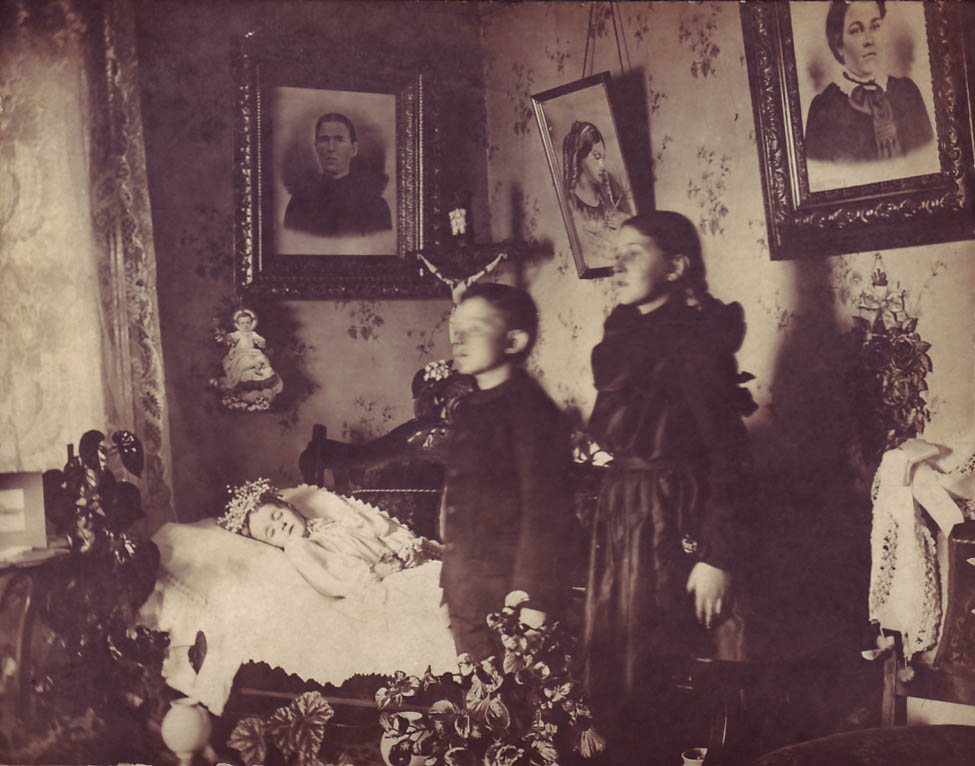
Dead child with siblings in attendance. Note the slight blur on the standing children owing to the long exposure
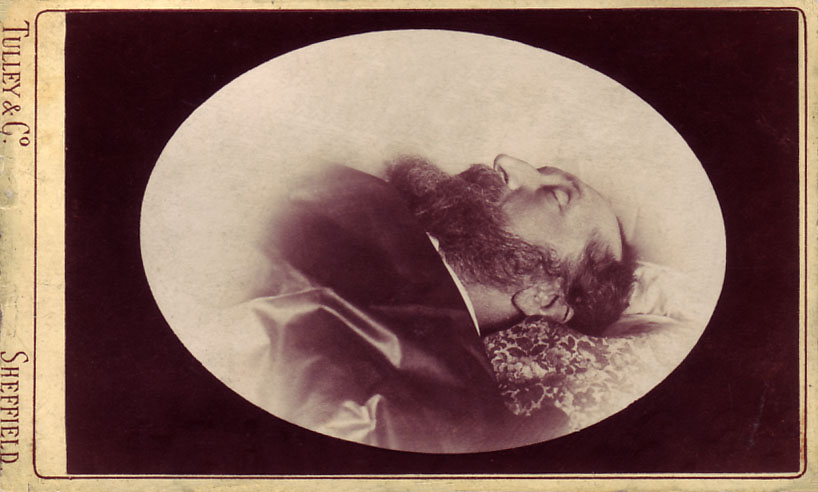
Dead man photographed in Sheffield, Yorkshire
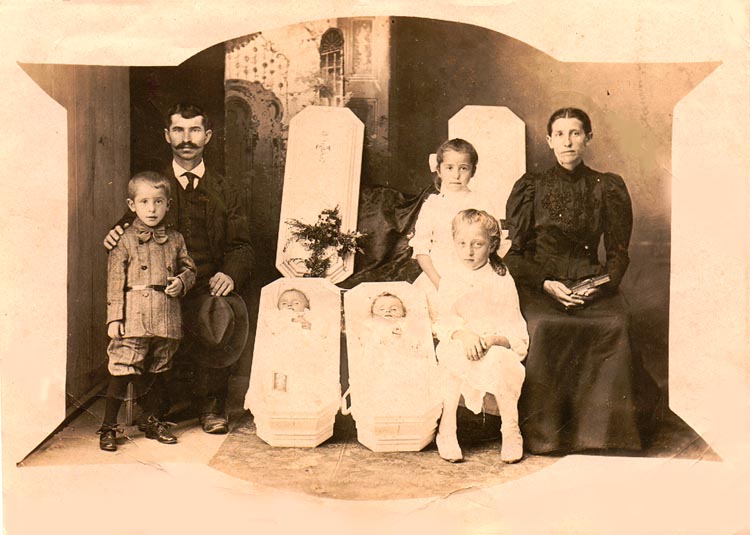
Mother, father, three living children, two dead children
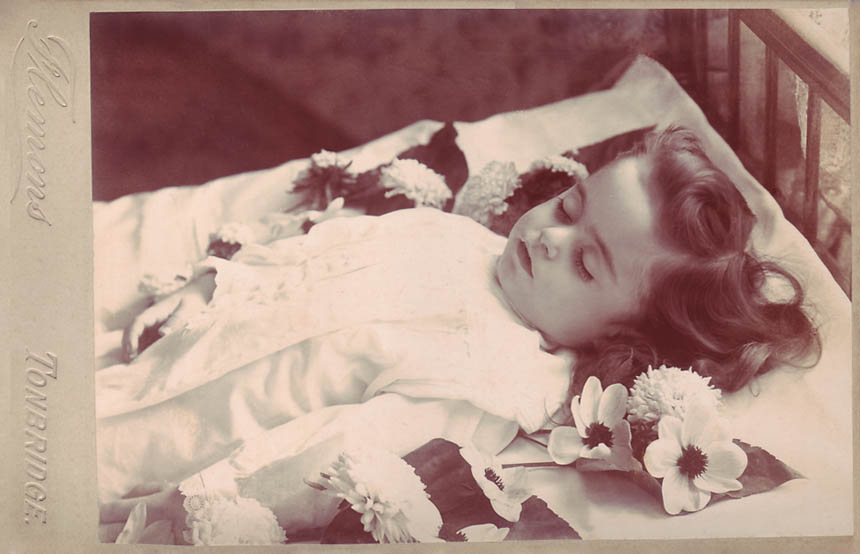
Post mortem photograph of a young girl, taken in Tonbridge, Kent


Fascinating!
Morbid, and gruesome, but fascinating (-:
It’s weird to see the dead children and their little coffins…touching!
Photographs of deceased ones close to us are a precious keepsake to be cherished.
The modern world is so removed from the death of its loved ones that we too often only see photographs such as these as grotesque. The time when family members washed the bodies, dressed them for burial, and dug the grave is really not so long ago. Now, like care of all kinds, we’ve handed what was once a sacred duty over to strangers - and lost much in the process.
Hello from Russia!
Can I quote a post in your blog with the link to you?
[...] Dead photos – Victorian post-mortem photographs - Photo [...]
[...] Dead photos – Victorian post-mortem photographs - Photo [...]
Wow, it really goes to show how silly traditions are, that something this creepy could’ve been standard fare back then
No offense, did you take a second thought before writing this? Perhaps at that time photos were very expensive and people found it natural to do something like this to preserve the memory of a loved one, even if a bit too late.
Also, I consider the thinking of the grieving family to do such think superior to your “Silly” - qualification of their action.
Very interesting post. There is a huge archive of these post mortem photos at http://www.thanatos.net
I don’t think it is weird or obsessive. If families didn’t record the person’s image just before he/she was buried, how would they ever memorialise their loved one? In most cases, the post-mortem photograph was the only photograph they would ever have.
In any case, they are posed beautifully.. peacefully.
My girlfriend owns a copy of Barbara Norfleet’s Looking at Death.
It got me interested in these kind of pictures. That tanatos site is no option for me because it’s not free but I found some more sites with a lot of post mortem pictures.
http://www.antiquephotoalbum.nl
http://www.paulfrecker.com