Category: history

A Funeral & Four Weddings: Princess Charlotte & Succession Crisis

By Blog author, June 16, 2010 1:47 am

Heir to the throne - Princess Charlotte

By 1815, the succession hung by one teenage girl, Princess Charlotte. King George III and his wife, Queen Charlotte, had had 15 children, 12 of whom lived to adulthood.

But although George III had at least 20, and perhaps as many as 35 grandchildren, all except Princess Charlotte were illegitimate, and couldn’t inherit the throne.

In 1817, 21 year old Princess Charlotte died in what was known as the “triple obstetric tragedy”. She was second in line to the British throne, after her father, the future George IV.
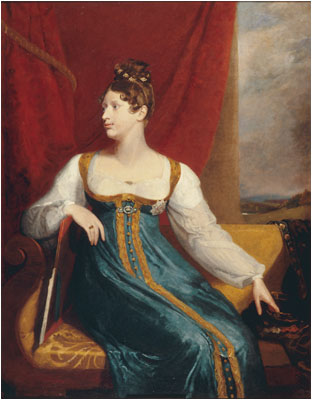
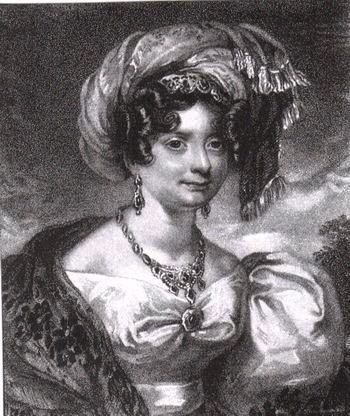
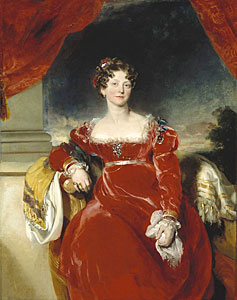
Princess Charlotte of Wales, daughter of King George IV and Queen Caroline of Brunswick, in 1817

Princess Charlotte of Wales, daughter of King George IV and Queen Caroline of Brunswick, in 1817

And her death in childbirth, and the stillbirth of her infant son at the same time, meant that there was a serious problem. (The third death was that of the doctor who attended her in labour, who shot himself.)

Heirs to the throne suddenly looked to be in short supply.

Her many bachelor uncles had to disentangle themselves from various mistress and live-in lovers, and join in a rather undignified stampede to the altar, to try and produce another legitimate heir for the British and Hanoverian thrones.

The uncles were by then all in their late 40s or early 50s, and had to select young German princesses and duchesses to marry.

This is the second in a related series of posts. The first isabout King George III’s children, their mistresses, and various illegitimate children.

Princess Charlotte’s Childhood

King George IV, Princess Charlotte's father, at his coronation in 1821

King George IV, Princess Charlotte's father, at his coronation in 1821

Charlotte Augusta, named after both her grandmothers, was born on 7th January 1796 at Carlton House, in London. She was the only child of her parents’ marriage.

Princess Charlotte’s parents loathed each other from the moment they met, shortly before they married in April 1795.

Prince George had agreed to marry Caroline of Brunswick because he wanted more money from Parliament. He hoped for a further increase when Charlotte was born, and was furious that his request was denied.

Charlotte’s father, later George IV, claimed they had only had sex 3 times.

After Charlotte was born, the Prince of Wales and Princess Caroline separated and rarely saw each other again.

Charlotte was used as a weapon by both parents against the other from the time she was born, and throughout her childhood.

Her mother was forbidden from seeing her more than once a day, and then only under supervision. Her father visited her every few weeks, if he could be bothered.
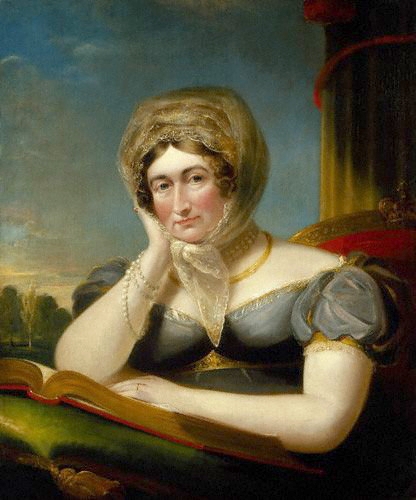
Queen Caroline of Brunswick, Princess Charlotte's mother, in 1820

Queen Caroline of Brunswick, Princess Charlotte's mother, in 1820

She had a strict and disciplined childhood, ordered by her father, with a timetable and little access to social life.

At the age of 11, on holiday, Princess Charlotte was described as overweight and too noisy, and was also prone to mood swings.

In 1811, when Charlotte was 15, her father became Regent of the country, as George III, Princess Charlotte’s grandfather, had succumbed again to insanity.

George used his new powers to restrict Caroline’s access to their daughter, and Caroline responded with a propoganda campaign, leaflets, and pamphlets.

Prince George then caused details of a secret enquiry into Caroline’s sexual conduct to be leaked.

In 1814, Caroline agreed to leave the country, in return for a higher allowance, and she left, initially for Italy.

Princess Charlotte’s Marriage & Pregnancies

The Wedding of Princess Charlotte and Prince Leopold of Saxe-Coburg-Saalfeld in 1816

The Wedding of Princess Charlotte and Prince Leopold of Saxe-Coburg-Saalfeld in 1816

Also in 1814, the Prince Regent arranged for his daughter Charlotte to marry Prince William II of the Netherlands, but both Charlotte and her mother, Caroline of Brunswick, refused the match.

Charlotte then married Prince Leopold of Saxe-Coburg-Saalfeld at her place of birth, Carlton House, in May 1816, when she was 20 years old.

She became pregnant quickly, twice, and mis-carried on both occasions.

Her third pregnancy within a year was subject to the sort of medical attention more likely to do her harm than good - her diet was very restricted, and she was bled regularly.

The Triple Obstetric Tragedy

Charlotte carried her third pregnancy to term - in fact, two weeks overdue.

The 9lb baby, however, was lying sideways, instead of head down or even head up, and the labour lasted 50 hours before she gave birth to a stillborn boy on 5th November 1817.

Princess Charlotte herself died the following day.

Sir Richard Croft had been Charlotte’s doctor though her pregnancy and labour. Three months after Charlotte’s death, Croft shot himself, leaving a copy of Shakespeare’s play Love’s Labour Lost open at the scene which says, Fair Sir, God save you! Where is the Princess?

The Rush to the Altar
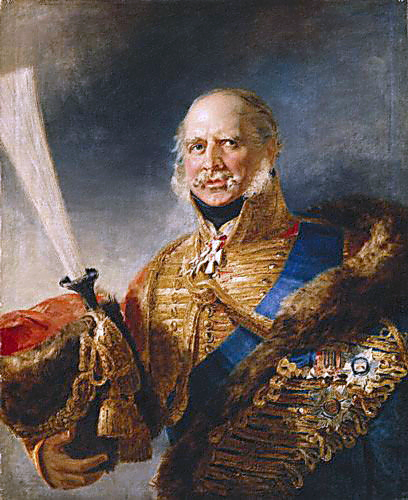
King Ernest I of Hanover

King Ernest I of Hanover

King George III’s two eldest sons, Prince George and Prince Frederick, were both married but separated from their wives.

Ernest Augustus, Duke of Cumberland and Teviotdale and Earl of Armagh, had married before Charlotte’s death. In 1815, he had married his first cousin, Frederica of Mecklenburg-Strelitz.

At the time Princess Charlotte died, they had had no children.

Ernest and Frederica went on to have a stillborn daughter in 1818, and a son, later King George V of Hanover, born in May 1819.

After Princess Charlotte’s death in November 1817, the following year saw 4 of King George III’s children marry.

In April 1818, Princess Elizabeth married Prince Frederick of Hesse-Homburg, but as Elizabeth was then 48 years old, children were unlikely.

The Royal Dukes had to find brides, and had to do so quickly.

King George III, Princess Charlotte's grandfather, at the time of his coronation.

King George III, Princess Charlotte's grandfather, at the time of his coronation.

The first was Adolphus, Duke of Cambridge, who married Princess Augusta of Hesse-Cassel, his second cousin, on 7th May 1818.

The marriage produced three legitimate grandchildren for George III, George, born on 26th March 1819, Augusta, born 19th July 1822, and Mary Adelaide, born 27nd November 1833.

The next to marry was Prince Edward, Duke of Kent. He had not had a long-term, live-in lover, but did have a bastard or two lurking.

Edward married, on 29th May 1818, a widow, Princess Victoria of Saxe-Coburg-Saalfeld, who was the sister of the Prince Leopold who had married Edward’s niece, Princess Charlotte.

In a further example of the incestuous royal marriages at this time, Princess Victoria’s first marriage had been to a man previously married to her own aunt.

The couple had one child, born in May 1819, Princess Alexandrina Victoria of Kent, who later became much better known as Queen Victoria.
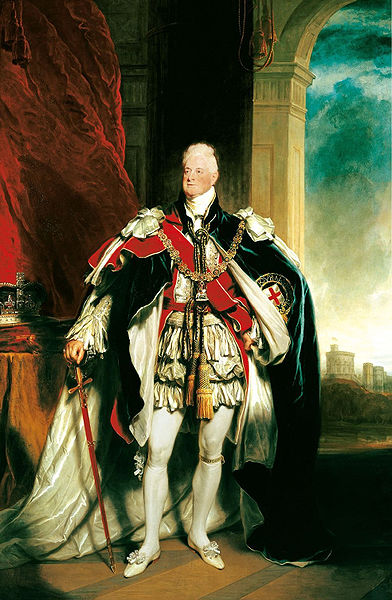
King William IV, also known as the "Sailor King"

King William IV, also known as the "Sailor King"

The third Royal Duke, the future William IV, had previously lived with Mrs Jordan for 20 years, and the couple had produced ten illegitimate children (William had other bastards, too).

William and the actress Mrs Jordan had more or less separated by the time Princess Charlotte died.

In July 1818, 50 year old William married the 25 year old Princess Adelaide of Saxe-Meiningen. William and Adelaide had two daughters, Charlotte Augusta Louisa (born 1819) and Elizabeth Georgiana Adelaide (born 1820) but both died within a few months of birth.

Adelaide also suffered several miscarriages, but had no more children.

George III’s lack of Heirs: 15 Children, but no Grandchildren…..

By Blog author, June 14, 2010 11:58 pm

Introduction

The first in a series of two posts, this one looks at the children of King George III and Queen Charlotte, and their complicated marriages and illegitimate children.

The second looks at the succession crisis which ensued after the death of Princess Charlotte, the only legitimate grandchild at the time of her death in childbirth.

Click here to read about A Funeral & Four Weddings: Princess Charlotte and the Succession Crisis

King George III and his descendants

King George III, Princess Charlotte's grandfather, at the time of his coronation.

King George III, Princess Charlotte's grandfather, at the time of his coronation.

By 1815, King George III and his wife, Duchess Sophia Charlotte of Mecklenburg-Strelitz, had had 15 children, 13 of whom lived to adulthood.

The royal couple also had hordes of grandchildren. Not a likely recipe for a succession crisis, it might appear.

But a crisis was indeed brewing. Despite all the adult children and massed ranks of grandchildren, the succession hung by a teenage-girl thread - because, remarkably, although there were tens of grandchildren, they were all illegitimate, apart from one - the then 19 year old Princess Charlotte, daughter of King George III’s eldest son, the future George IV.

All George III’s daughters were past child-bearing age, and his sons had exhibited a remarkably consistant tendancy to form irregular marriages or relationships, which did not therefore produce legitimate heirs to the throne.

King George and Queen Charlotte seem to have been particularly protective of their daughters - some did not marry at all, while others only married in their 40s. Their parents appeared reluctant to have them live lives other than as their mother’s companions.

The sons, on the other hand, were a dissolute and unprepossessing group, taken as a whole. They ran up debts, the scale of which is almost impossible to imagine. The future George IV, for example, at one time had debts equivalent to about £50 million in today’s money.

There also appears to have been a considerable degree of in-breeding. Many of the children married first or second cousins. And all of the Hanoverians appear to have been a pretty ugly bunch!

King George’s children

Queen Charlotte, wife of King George III and mother of King George IV and William IV

Queen Charlotte, wife of King George III and mother of King George IV and William IV

1. George IV born 12th August 1762

2. Frederick, Duke of York, born 16th August 1763

3. William IV born 21st August 1765

4. Charlotte, Princess Royal born 29 September 1766

5. Edward, Duke of Kent born 2nd November 1767

6. Princess Augusta Sophia born 8th November 1768

7. Princess Elizabeth born 22nd May 1770

8. Ernest Augustus I of Hanover, Duke of Cumberland born 5th June 1771

9. Augustus Frederick, Duke of Sussex born 27th January 1773

10. Adolphus, Duke of Cambridge born 24th February 1774

11. Princess Mary, Duchess of Gloucester born 25th April 1776

12. Princess Sophia born 3rd November 1777

13. Prince Octavius born 23rd February 1779

14. Prince Alfred born 22nd September 1780

15. Princess Amelia born 7th August 1783

The two youngest sons died before they were 5 years old, and the other 13 children lived to adulthood.

Marital Malarkies

George IV

King George IV, Princess Charlotte's father, at his coronation in 1821

King George IV, Princess Charlotte's father, at his coronation in 1821

George Augustus Frederick, later Prince Regent, and later still King George IV, did his bit to contribute to the illegitimate grandchildren.

He married at the age of 21, but his marriage was not lawful for two reasons. Firstly, his bride, Maria Anne Fitzherbert, was a twice-widowed Catholic, and members of the Royal Family cannot produce heirs if they marry a Catholic. Secondly, he did not obtain (as he was obliged to do) the King’s permission for the marriage under the Royal Marriages Act 1772.

George IV and Maria Fitzherbert did not have children. George did father one named illegitimate son, George Seymour Crole, by another woman, and up to 5 other illegitimate children by various mistresses.

George IV was eventually pushed into an arranged marriage, with Caroline Amelia Elizabeth of Brunswick-Wolfenbüttel. This was a disaster from the beginning. They did produce the one legitimate heir to the throne, Princess Charlotte, but thereafter the marriage disintergrated into an undignified and public mess.

In a tactful move, Caroline of Brunswick was met on her arrival in the countryat Greenwich by Frances Villiers, Countess of Jersey, her newly-appointed Lady of the Bedchamber and her future husband’s then mistress.

Queen Caroline of Brunswick, Princess Charlotte's mother, in 1820

Queen Caroline of Brunswick, Princess Charlotte's mother, in 1820

The couple disliked each other from the start. She thought he was ugly, fat and boring, he thought she was smelly, tactless and rude. They were probably both right. Nevertheless, they married in April 1795.

George IV later claimed they had had sex only 3 times, but fortunately one of those occasions lead to the birth of Princess Charlotte in January 1796.

George IV and Caroline separated immediately after Charlotte’s birth. Both were accused of taking lovers and having affairs.

In 1806, a secret commission lead by the Prime Minister investigate allegations that Caroline had given birth to an illegitimate son. The commission cleared her of giving birth to a child, but said that her behaviour was appalling.

When George IV was crowned in 1821, Caroline arrived at Westminster Abbey but was barred from the building. She died a few months later.


Prince Frederick, Duke of York and Albany

Frederick married a cousin, Frederica Charlotte of Prussia, in 1791. They quickly separated, and had no children. Frederick is thought to have had several illegitimate childern, about 5 in total.

William IV, Duke of Clarence and St Andrews and Earl of Munster

King William IV, also known as the "Sailor King"

King William IV, also known as the "Sailor King"

William Henry spent 20 years living with his mistress, Dorothea Bland, better known by her stage name, Mrs Jordan.

William was another son of George III who realised he wouldn’t get the necessary consent under the Royal Marriages Act, so he co-habited with Mrs Jordan from 1791.

The couple had ten illegitimate children, 5 daughters and 5 sons, given the surname “FitzClarence”. William also had an illegitimate son by another woman before he started living with Mrs Jordan.

Princess Charlotte, The Princess Royal

Charlotte Augusta Matilda married The Hereditary Prince Frederick of Württemberg in 1797 when she was 21 years old - he later became, in order, the Duke of Württemberg, Elector of Württemberg, and King Württemberg.

The couple’s only child was a stillborn daughter born a year after their marriage.

Prince Edward, Duke of Kent and Strathearn

Edward Augustus was also unmarried in 1815. Unlike many of his brothers, Edward did not have a long-term co-habitation. He had a number of mistresses, and at least one illegitimate daughter.

Princess Augusta

Augusta Sophia never married, and remained living in England until her death, when she was 71.

Princess Elizabeth

Elizabeth married Prince Frederick of Hesse-Homburg in 1818, when she was 48 years old. The couple had no children.

King Ernest Augustus I of Hanover

Ernest Augustus, Duke of Cumberland and Teviotdale and Earl of Armagh, inherited the throne of Hanover when his older brother William IV died, as Hanover had the salic law and women were barred from inheriting.

King Ernest I of Hanover

King Ernest I of Hanover

Unlike his elder brothers, Ernest kept his private life private, and was single until he married his twice-widowed first cousin, Frederica of Mecklenburg-Strelitz, in 1817.

The couple had a still-born daughter in 1818, and a son, Prince George, in 1819.

Prince Augustus, Duke of Sussex

Augustus Frederick married Lady Augusta Murray in 1793, without the required permission of the King under the Royal Marriages Act. the Privy Council annulled the marriage in 1794, but the couple continued to co-habit.

The couple had two children, Augustus and Augusta (no ego in naming there…..). After his first wife’s death, Augustus married again, in 1831, Lady Cecilia Letitia Buggin, also in contravention of the Royal Marriages Act.

Prince Adolphus

Adolphus Frederick did not have any illegitimate children that I know of, but at the time of Princess Charlotte’s death, was still unmarried. He finally married a cousin, Princess and Landgravine Augusta of Hesse-Cassel, in 1818.

Princess Mary

Mary married her first cousin, Prince William Frederick, Duke of Gloucester and Edinburgh, in 1816, when she was 42 years old. The couple had no children.

Princess Sophia

Princess Sophia

Princess Sophia

Sophia Matilda never married. There were long-standing rumours of an incestuous relationship with one of her brothers, Ernest Augustus, and also an allegation that she had an illegitimate child in 1800 by a royal groom.

Princes Octavius and Alfred

Both died before they were 5 years old.

Princess Amelia

The youngest of King George III’s 15 children, Amelia was often described as her father’s favourite. She fell in love with a royal equerry, Hon. Sir Charles FitzRoy, when she was 20, and had an affair with him.

Amelia died unmarried at the age of 27, having been ill with tuberculosis for some years.

The 5 Longest Reigning Kings & Queens – Henry III, Fourth Place

By Blog author, May 18, 2010 12:18 am

King Henry III - 56 years and 29 days

Some English (and British, after the accession of King James I of England & VI of Scotland) managed to keep their backsides firmly on the throne for longer than the average birth to death life expectancy of their subjects.

This post is one of a series about the 5 longest reigns – all of which were (or are, in the case of Elizabeth II) over 50 years. For obvious reasons, they were all young when they came to the throne, but not all were children.
For the fifth-longest English reign, that of King Edward III in the 14th century, see this previous post.

King Henry III

King Henry III

The fourth-longest reign was also a Medieval one – King Henry III in the 13th century. Henry’s reign, which started when he was only 9 years old, saw the development of the rule of law and the power of Parliament in England (despite, rather than because of, the King). It was also during Henry III’s reign that the City of Westminster became the fixed seat of many government functions.

King Henry III’s Family and Background

Like the fifth-longest reigning King, Edward III, Henry III had a difficult family and background. Henry was born on 1st October 1207, the eldest child of King John and Queen Isabella of Angoulême.

King John was the youngest of the 8 children born to King Henry II and Queen Eleanor of Aquitaine.

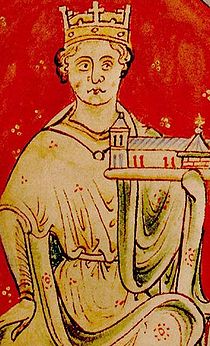
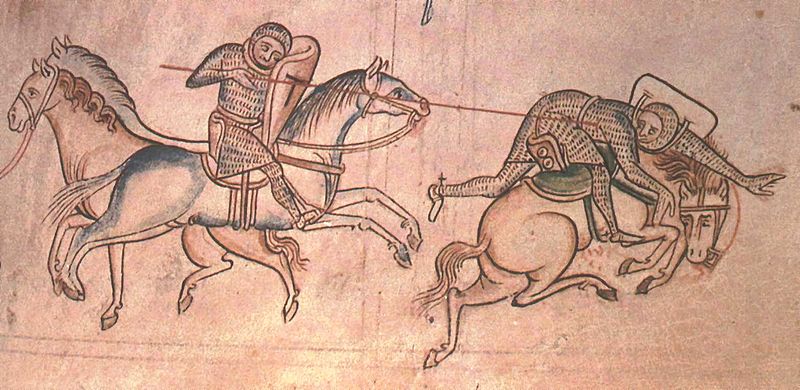
King John of England, father of King Henry III, from the "Historia Anglorum" by Matthew Paris

King John of England, father of King Henry III, from the "Historia Anglorum" by Matthew Paris

When he was born, his parents’ marriage was already turning hostile (Eleanor of Aquitaine later supported her sons in rebelling against their father, and was locked up for the rest of Henry II’s reign). When Henry II died, his eldest son, William, and his then heir, Henry the Young King, were already dead.

The third son, King Richard I (also known as Richard Coeur de Lion, or Richard the Lionheart in English) died without a legitimate son in April 1199, and John inherited the throne, having already tried to usurp it while his brother Richard was fighting in the Crusades in the Holy Land.

John, who was given the charming nicknames of John Lackland, and John Softsword, is popularly regarded as the worst-ever English King, amid some stiff competition. He alienated his barons by losing almost all the Crown’s possessions in France, by confiscation property without trial, and by having starved a baron’s wife to death in a dungeon.

King John was excommunicated by the Pope in November 1209, and the country placed under an interdict, so no baptisms, marriages or funerals could take place.

John was also responsible for the disappearance and likely murder of Arthur of Brittany, his older brother Geoffrey’s son, who had a better claim to the throne than he did. His barons forced him into signing the famous Magna Carta at Runnymede on 15th June 1215.

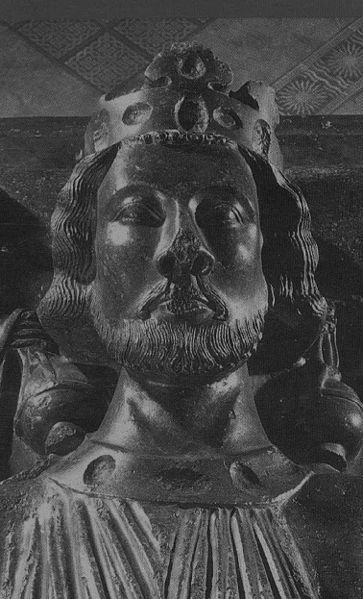
The Effigy of King John, King Henry III's father

The Effigy of King John, King Henry III's father

King Henry III’s mother was Isabella of Angoulême, 11 or 12 years old at the time King John took her away from her home and her then-fiancee, Hugh of Luisignan. John, although 20 years older than his new wife, consummated their marriage immediately - Isabella was said to be very beautiful even at the time of her marriage, when she was so very young.

Henry III had 4 full brothers and sisters, Richard Earl of Cornwall, Joan, Queen of Scotland, Isabella, Holy Roman Emporess, and Eleanor or Nell, who married William the Marshall and then Simon de Montfort.

He had 9 half-siblings, the children of his mother Isabella of Angoulême and her second husband, Hugh X of Luisignan (the man to whom she had been engaged before King John married her instead).

As well as these legitimate half-siblings, he also had a large number (at least 12) of illegitimate half-siblings, the sons and daughters of King John by a wide variety of mistresses.


Henry III’s childhood

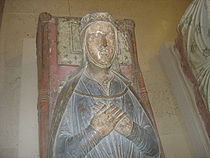
The effigy of Isabella of Angoulême, King Henry III's mother

The effigy of Isabella of Angoulême, King Henry III's mother

Henry III was born in Winchester Castle, in 1207, and was therefore often known as Henry of Winchester. A fascinating site about Winchester’s Great Hall can be found here.

Henry’s parents had separate households and incomes, as was normal for medieval Kings and Queens. From birth, Henry was based in the Queen’s household, before his own household and officials were established when he was 7 years old.

King John’s death in 1216 made Henry III the first child-King since the Norman Conquest, and the second-youngest monarch from then until now - only Henry VI inherited at an earlier age, when King Henry V died and left his 8 month old son as King.

Accession to the throne

After the Magna Carta was signed in 1215, King John fell out with his barons again. A majority of them rebelled against him, and offered the throne to the heir to the French throne, Prince Louis of France, who invaded as a result of the invitation. Louis was proclaimed King in London in May 1216, and King John then moved around the country to rally support against the French.

John was crossing the Wash, an estuary between Norfolk and Lincolnshire, when the tide came in faster, and much of his baggage train, horses and soldiers were lost. The Crown Jewels, in the baggage train, vanished for good. John died a few days later on 18th October 1216, at Newark Castle in Lincolnshire.

Having rid themselves of King John, the barons turned against Louis of France, and Henry III was proclaimed King at the age of 9, and crowned for the first time by the Bishop of Winchester, with a simple gold coronet, as the Archbishop of Canterbury was still with Louis, and the Crown Jewels were at the bottom of the North Sea. He was later re-crowned in 1220, in an attempt to remedy these problems.

King Henry III’s Minority

William the Marshall, the protector during King Henry III's minority, from the "Historia Anglorum" by Matthew Paris

William the Marshall, the protector during King Henry III's minority, from the "Historia Anglorum" by Matthew Paris

As Henry was too young to rule directly, a protector was appointed. The first was William the Marshall, Earl of Pembroke.

An extraordinary man, William had served 4 Kings - Henry II, Henry the Young King, Richard I, , and lastly John, despite the fact that most of these Kings loathed each other, blood relationships notwithstanding. (Henry, Richard and John were all sons of Henry II).

When William the Marshall died in 1219, the second protector, until 1227, was Hubert de Burgh.

Both protectors announced that they would rule in according to the letter and in the spirit of the Magna Carta.

Although William the Marshall was about 70 years old when he became the protector, he nevertheless organised the defence against Prince Louis, and got rid of the French invasion quickly. He personally lead the victorious English army against the French in the battle of Lincoln.

The Magna Carta was re-issued in 1217, by William the Marshall, who had been one of the original barons who signed it and made King John do the same.

Henry III’s Adult Reign

A stone sculpture of Queen Eleanor of Provence, King Henry III's wife, in Westminster Abbey

A stone sculpture of Queen Eleanor of Provence, King Henry III's wife, in Westminster Abbey

Henry took over the government in 1227, when he was 20 years old. His reign was marked by struggles with his barons, who liked the Magna Carta and resisted all attempts to dilute it or ignore it.

King Henry married Eleanor of Provence in 1236, when he was 28, and she was about 13 - she met him the same day as they married. Eleanor was intelligent, more educated than almost any other medieval woman, and attractive. She was disliked by many in England, however, and brought a lot of relatives with her who obtained patronage from the royal households.

Henry and Eleanor of Provence had at least 5 children, and perhaps up to 9. 5 children lived long enough to be counted for certain. The eldest was Edward, later Edward I, then two daughters, Margaret and Beatrice, who married the King of Scotland and the Duke of Brittany respectively. The fourth was another son, Edmund Crouchback, Earl of Lancaster, and the fifth a daughter, Katherine, who died in late childhood.

Henry and Eleanor both encouraged literacy and education - at least 3 university colleges were founded at Oxford during Henry’s reign, and an increasing number of books were published, including Matthew Paris’ Historia Anglorum, part of his major work of history, Chronica Majora.

Henry’s royal motto was qui non dat quod habet non accipit ille quod optat, or in English, He who does not give what he has, does not receive that which he wants

Henry imported a large number of his half-siblings from his mother’s second marriage, the Luisignans. This was a very unpopular move.

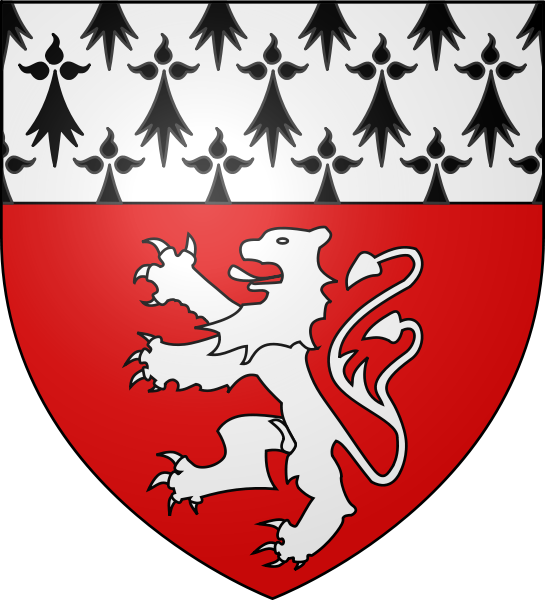
The Coat of Arms of Simon de Montfort

The Coat of Arms of Simon de Montfort

One of Henry’s major opponents was Simon de Montfort, Ear of Leicester, who married Henry’s youngest sister, Eleanor (also known as Nell).

In 1258, the King was obliged by the barons to sign the Provisions of Oxford, which provided for a King’s Council and regular meetings of Parliament to supervise what the King did. Henry III objected to these limits on his power, and got the Pope to absolve him of the oaths in 1262.

This lead to war - the rebels, under Simon de Montfort, captured much of southern England, and in 1264, at the Battle of Lewes, captured Henry III and his heir, the future Edward I.

Edward escaped, and rallied his forces, and the de Montfort experiment in constitutional monarchy was ended 16 months later at the Battle of Evesham.

Following the victory at Evesham, the retribution against the rebels was thorough. Simon de Montfort’s body was cut up and the parts distributed as prizes of battle.

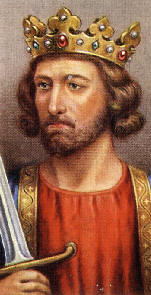
King Edward I, son and heir of King Henry III

King Edward I, son and heir of King Henry III

Edward I, having won at Evesham, was in many ways in control of the government, as his father was now a little vague and happy to leave important matters to his son and heir.

Henry III died in November 1272 at Westminster, and was buried in Westminster Abbey, also the site of Edward the Confessor’s tomb. Henry had been very fond of the cult of Edward the Confessor, and had made the Abbey, built by Edward in the early 11th century, an important royal site and place of pilgrimage.

Henry’s wife, Eleanor of Provence, lived almost 20 years longer. She stayed in England, and brought up several of her grandchildren, including Edward I’s. She then took the veil, and died in 1291 in Amesbury Abbey, a Benedictine foundation, also known as the Abbey of St. Mary and St. Melor

Henry was succeeded by Edward I, also known as Edward Longshanks (because of his height) and Edward Hammer of the Scots (because of his successful wars in Scotland).

The 5 Longest Reigning Kings & Queens - Edward III, Fifth Place

By Blog author, May 2, 2010 1:57 am

King Edward III - 50 years 4 months 25 days

Some English (and British, after the accession of King James I of England & VI of Scotland) managed to keep their backsides firmly on the throne for longer than the average birth to death life expectancy of their subjects.

This post is one of a series about the 5 longest reigns - all of which were (or are, in the case of Elizabeth II) over 50 years.

For obvious reasons, they were all young when they came to the throne, but not all were children.
The fifth-longest reign was a Medieval one - King Edward III’s domination of the 14th century

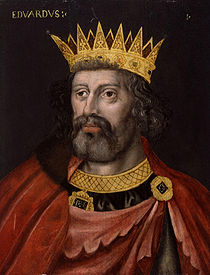
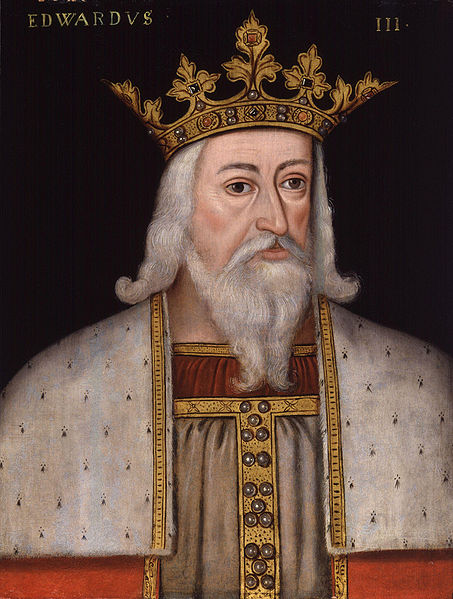
A portrait of King Edward III

A portrait of King Edward III

Family and childhood

Edward III lived from 13th November 1312 – 21th June 1377, and was the eldest child of King Edward II and his wife, Isabella of France.

The politest word for Edward and Isabella’s marriage is “disastrous”. Known also as Edward of Carnarvon / Caernarfon after his Welsh birthplace, he married Isabella, daughter of the King of France, in 1308.

Edward II had two successive male “favourites” who were allowed to run riot with the country, and Piers Gaveston and Hugh Despenser the Younger. Both were eventually killed by irate barons.

In a further twist to Edward III’s childhood harmony, Edward II was then deposed by his angry and humiliated wife, Queen Isabella, and her lover Roger Mortimer, and then died quietly in captivity, probably murdered on Isabella’s orders.

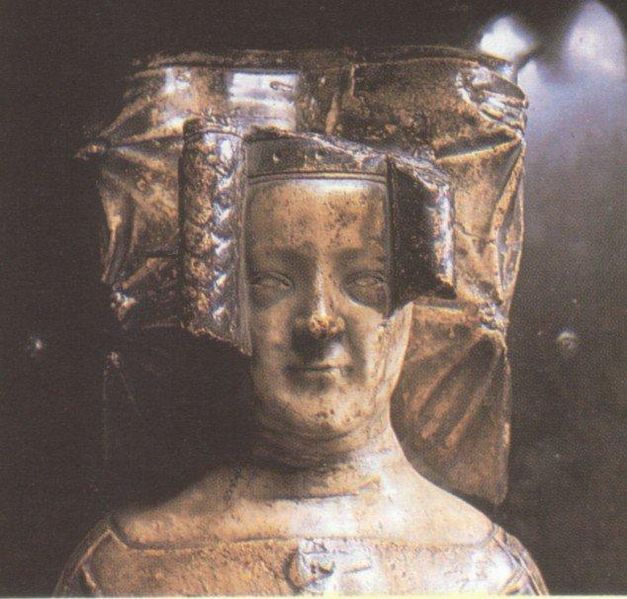
Effigy of Queen Philippa of Hainault

Effigy of Queen Philippa of Hainault

Accession to the throne

Thus Edward III came to the throne at the age of 14, with the country effectively ruled by Mortimer.

Edward married Phillipa of Hainault when he was 15, and she was 16, and then instituted a coup of his own when he was 17, arresting and executing Roger Mortimer, and exiling his mother, Queen Isabella.

Edward’s Reign

Despite a background which could only be described as dysfunctional, Edward and Phillipa seem to have had a happy marriage - far fewer mistresses and bastards than was common for medieval Kings. Edward’s only known mistress, Alice Perrars, entered his life when Queen Philippa was frail and terminally-ill, and he had no bastard children.
King Edward III and his son, Edward the Black Prince, from a contemporary illustration

King Edward III and his son, Edward the Black Prince, from a contemporary illustration

They had 9 children who survived to adulthood - Edward the Black Prince, Isabella, Joan, Lionel of Antwerp, John of Gaunt, Edmund of Langley, Mary, Margaret and Thomas of Woodstock, as well as 5 others who died in childhood.

Edward III’s reign was, in many ways, successful and busy. He succeeded in winning famous battles against the French, including Poitiers and Crecy, and did the traditional Scots-bashing, too.

Edward also calmed things down in the country after the turmoil and rebellion of his father’s reign.

One obvious bleak spot in his reign was the Black Death, which made its first appearance in the early 1350s, and killed an estimated third to half of the population, including two of King Edward’s own children.
Edward was succeeded by his grandson, King Richard II. Richard’s father, Edward the Black Prince, died before his own father.

One long-standing and unforeseen consequence of King Edward’s many surviving children was the growth of the wealthy, royal aristocracy who helped kick off the Wars of the Roses in the 15th century………

Henry VIII’s Wives: Catherine of Aragon’s family and childhood

By Blog author, April 26, 2010 2:32 am

Catherine of Aragon (1485 to 1536)was King Henry VIII’s first wife - out of six. She was his wife for 24 years, but ultimately fell foul of Henry’s obsession, that he father a legitimate son.

This post, the first of a series about Henry’s wives, is not about the political and religious context of Catherine and Henry’s marriage, but about Catherine of Aragon herself - her family, her education, and her appearance.

What Catherine of Aragon looked like

Catherine did not look like a modern view of a typical Spanish girl. She was not dark-haired or olive-skinned. Like her sisters and brother, she seems to have had reddish-blonde hair, and fair skin. She also had bright blue eyes.

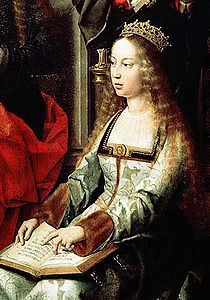
Portrait of Catherine of Aragon when she was Prince Arthur's widow, by Michel Sittow

Portrait of Catherine of Aragon when she was Prince Arthur's widow, by Michel Sittow

Catherine was also small - as a girl, both short and petite, although (not surprisingly) she put on a considerable amount of weight because of repeated pregnancies.

The English Tudor ideal of a beautiful woman was one who was fair-haired and fair-skinned, and Catherine seems to have been attractive and a pretty girl and young woman.

The portrait to the right of this text shows Catherine as a young woman, after she was widowed by the death of Prince Arthur, older brother of Henry VIII. She was therefore about 17 when it was painted.

Further down in this post, there are portraits of Catherine’s mother, Isabella, and one of her sisters, Joanna, both of whom looked very similar to Catherine, particularly in colouring.

Daughter of the Catholic Kings

Catherine’s parents were both monarchs in their own rights - Ferdinand (1452 to 1516) was King of Aragon, and Isabella (1451 to 1504) was Queen of Castile.

Ferdinand of Aragon, Catherine of Aragon's father, painted by Michel Sittow

Ferdinand of Aragon, Catherine of Aragon's father, painted by Michel Sittow


The couple, awarded the title of “The Catholic Kings” by the Pope, ruled together over the greater part of the Iberian peninsula, and completed the reconquista, or wars against the Moors.

At the conclusion of the reconquista in 1492, there were no Islamic states based in Spain for the first time for over 500 years.

They also expelled the large, successful and well-integrated Jewish communities throughout their realms.

Ferdinand and Isabella married in 1469, aged 17 and 18 respectively, and established co-sovereignty over the two Kingdoms, with both their heads appearing on coins, both signatures on royal proclamations and charters, and both costs of arms equally displayed.

Isabella made sure that she did not submit (as Ferdinand wanted) to being a royal consort, she was Queen in her own country.

Isabella travelled with her armies, camped with them, even when heavily pregnant, and saw herself, it appears, as the religious warrior Queen.
Isabella of Castile, Catherine of Aragon's mother

Isabella of Castile, Catherine of Aragon's mother

Machiavelli had a particular admiration for Ferdinand, saying:

From being a weak King he has become the most famous and glorious King in Christendom. And is his achievements are examined, they will be found to be very remarkable

Birth and siblings

Catherine was the youngest of 5 children who survived to adulthood. The older four, in order, were Isabella, Juan (the only boy), Juana, and Maria.

Isabella (1470 to 1498)

In April 1490, aged 19, Isabella married Prince Alfonso of Portugal in Seville. He died the following year, and she returned home to her parents before marrying Manual I of Portugal, who was Alfonso’s uncle. She bore him a son, Miguel, in 1498, but died in childbirth, Miguel himself died aged 2.

Juan or John (1478 to 1497)

Juan / John married the Archduchess Margaret in 1497, and died 6 months later. His posthumous son was still born also, meaning that the position of heir to Castile and Aragon passed to his older sister Isabella, then her son Miguel, then to his younger sister Joanna.

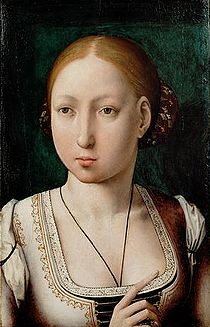
Joanna the Mad, Catherine of Aragon's sister, painted by Juan de Flandes in about 1500

Joanna the Mad, Catherine of Aragon's sister, painted by Juan de Flandes in about 1500

Juanna / Joanna (1479 to 1555)

Joanna the Mad is the title normally given to her, which sums up the general view of Joanna later in her life. She married Phillip of Burgandy, also known as Phillip the Handsome, when she was 16 years old, in 1496.

Joanna had 6 children who lived to adulthood, born within 8 years of each other - the four girls became queens (of France, Denmark, Bohemia and Portugal) and both her sons, Charles and Ferdinand, became Holy Roman Emperor in turn.
Joanna and Phillip appear to have had a tempestuous marriage, and there were many affairs and illegitimate children on Phillip’s part. When Phillip died, she had his body carried around in a coffin for some time before she permitted burial.
Her father, Ferdinand, did not want his throne to pass to Joanna and / or her son Charles V, Holy Roman Emperor.

When Ferdinand failed to produce another male heir by his second marriage, and had to pass his first wife’s throne of Castile over to her, he resented it, and engaged in machinations and devices, such that he was regent of Castile after Isabella’s death.

Maria (1482 to 1517)

After the death of her older sister Isabella, Maria was sent to Portugal to marry Isabella’s widow, Manuel I of Portugal. She married him in 1500, when she was 17 years old. The couple had 7 children who lived to adulthood. After Maria’s death, Manuel married Eleanor, who was the niece of his first two wives (Joanna’s daughter) which makes for a very incestuous marital history - two sisters, and a third sister’s daughter.

Childhood and education

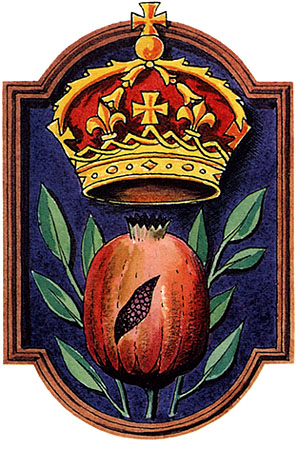
Catherine of Aragon's badge when she was Queen of England

Catherine of Aragon's badge when she was Queen of England

Isabella of Castile embraced the humanist and classical revolution espoused by Erasmus. Her own education had not been thorough, and that planned for her children was academic and detailed. Catherine of Aragon (like her siblings) was well-educated in Latin as well as Spanish, although her texts were principally those written by Christian Romans, such as Augustine, Jerome and Gregory, as well as the moralists from Ancient Rome, such as Seneca.

She was also tutored in Spanish literature, and Spanish translations of stories about King Arthur and Camelot.

Isabella’s own obsession with religion and military matters may have been the reason that Catherine and her sisters were not given the courtly education, including music, singing, poetry and so forth, that most European princesses and aristocrats had.

Nor were they taught the languages of their intended future husbands, which seems a bit odd - so Catherine spoke, fluently, Castilian Spanish and Latin, but not English. Fortunately, her first husband, Prince Arthur, was also well-educated in the classics, so they could communicate in Latin.

Catherine’s religious education was setting her up for trouble in the long term. The rigid views of her parents, particularly her mother, were fortified and strengthened by their victories over the Islamic Moors, and the expulsion of the Jews from Castile and Aragon. One of Catherine’s sisters, Maria, made it a condition of her marriage to the King of Portugal that he follow her parents’ example, and expel all Portugese Jews.

Catherine’s religion was therefore a rigid, militaristic, and non-compromising faith. In the coming Age of Reformation, that would be distinctly awkward.

Edith Cavell: British Nurse Shot by the Germans for Treason, 1915

By Blog author, April 19, 2010 3:26 am

Standing as I do in view of God and eternity, I realise that patriotism is not enough, I must have no hatred or bitterness towards anyone

The words of Edith Cavell, spoken on 11th October 1915, the day before she was shot for treason by the Kaiser’s army.

Miss Cavell, the daughter of a Norfolk clergyman, had worked as a nurse, and matron of a hospital, in Belgium.

Once the First World War started, she returned from holiday at her mother’s home to her hospital in Brussels, and stayed there.

She nursed soldiers from Belgium, Germany, and Allied countries, and assisted British soldiers to escape occupied Belgium.

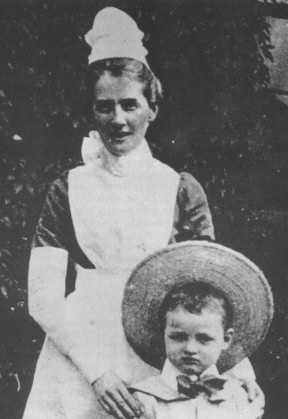
Edith Cavell as a governess in Belgium in the 1890s

Edith Cavell as a governess in Belgium in the 1890s

In August 1915, Edith Cavell was arrested for treason (rather than espionage or spying) and shot 10 weeks later, despite protests from neutral governments, including the USA.

Her death and actions during the war lead to her being admired and praised in her native country. Memorials were erected, a state funeral conducted, and she was venerated by the Church of England.

Her death was also a valuable source of propaganda for the British government, and they made full use of it.

Edith Cavell’s childhood and family

Edith Louisa Cavell was born on 4th December 1865 in Swardeston, Norfolk.

Her father, the Reverend Frederick Cavell, was a Church of England vicar, who held the living in Swardeston for 46 years in total, starting in 1863.

The vicar and his wife, Louisa Sophia Cavell, had 4 children in total. Edith was the oldest, followed by Florence, Lilian and John.

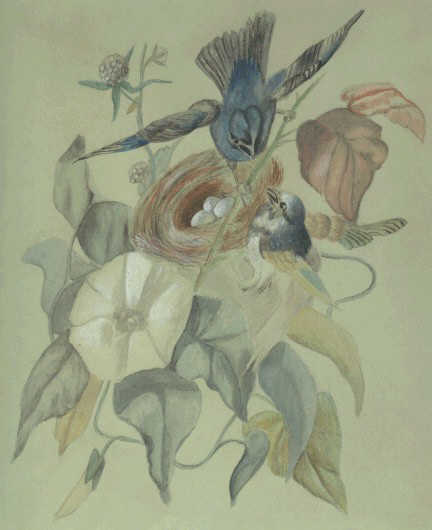
A watercolour painted by Edith Cavell

A watercolour painted by Edith Cavell

Edith appears to have had an upbringing that was in many ways typical for her age and class. She enjoyed tennis and dancing.

She was interested in nature, and painting and drawing. A number of examples of her work survive, such as the one to the right of this text.

Edith was educated at home until she was about 14 or 15 years old. She then attended Norwich High School for Girls for a short time, followed by 3 years spent in a variety of boarding schools.

Edith Cavell’s early working life

Edith was good at French, and after working as a governess in several English families, went to work for a family in Brussels when she was 24 years old, in 1890.

In 1896, Edith Cavell started her nursing training. It was hard work - the hours were 7am to 9pm, 6 days a week a half-hour break for lunch, and the pay was £10 a year plus room and food (about £900 in today’s money).

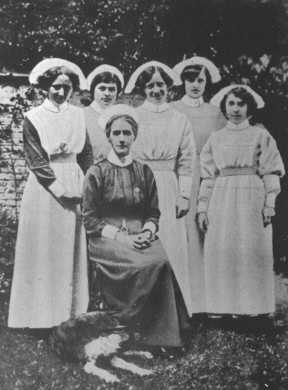
Edith Cavell and student nurses at 'L'École Belge d'Infirmières Diplômées' (The Belgian School of Registered Nurses)

Edith Cavell and student nurses at 'L'École Belge d'Infirmières Diplômées' (The Belgian School of Registered Nurses)

Edith Cavell finished her 3 years of training, and became a nurse. She worked, from 1899, in a series of Poor Law institutions and hospitals, in St. Pancras and Shoreditch, in London, and then in Manchester.

Return to Belgium

In 1907, Edith Cavell was invited by a Belgium doctor, Dr. Depage, to set up a training programme for secular nurses in Belgium; before that date, most nurses in the country were nuns.

Edith set up and ran the L’École Belge d’Infirmières Diplômées (Belgian School of Registered Nurses) in Brussels. She was also involved with Dr. Depage’s clinic, and lectured on modern nursing in other institutions.

The First World War

When war broke out in August 1914, Edith Cavell was enjoying her summer holiday with her mother, in Norfolk. She cut it short, saying that she was needed at her clinics in Brussels, and returned forthwith to Belgium.

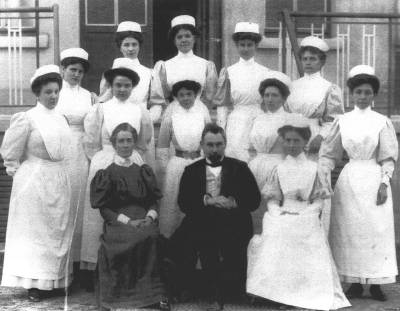
Edith Cavell and Dr. Depage with their nurses at the Red Cross Clinic

Edith Cavell and Dr. Depage with their nurses at the Red Cross Clinic


Her nurses were told by Edith of their duty to treat all patients, whether Belgium, German, French or English, in exactly the same way.

When Brussels fell, 7 weeks later, the German Army took over the hospital for the treatment of their own wounded soldiers. Most English nurses were sent home, but Edith Cavell remained, as a Red Cross matron at the hospital.

Edith Cavell then became involved in an underground group, which protected Allied soldiers and smuggled them out via Holland. At least 200 soldiers escaped in this way.

She continued throughout her time at the hospital to nurse German wounded men to the best of her ability, and kept her other activities a secret from the nurses under her command, so as to protect them.

Edith Cavell: A British propaganda poster

Edith Cavell: A British propaganda poster

On 4th August 1915, a year and a day after her return to Brussels, Edith Cavell was arrested by the German Army. She was interrogated, and told that her fellow-conspirators had confessed to what she and the organisation had been doing.

That was not true, but an inherently truthful woman herself, she believed them, and admitted her part in the organisation. She was tried, and admitted at the trial her part in assisting allied soldiers to escape German-occupied territory.

The trial was held on 7th October 1915, less than 5 days before Edith Cavell was executed. The death sentence was actually passed by the court less than 12 hours before she was killed.

The charge of “treason” looks very odd to my eyes - she was not a German national, and owed no loyalty to the Kaiser’s government, but was nevertheless convicted of the offence and sentenced to death.

It may be the case that Edith Cavell was actually a British spy, working for MI6. That was suggested by Nicholas Rankin in his book A genius for deception, how cunning helped the British win two world wars, published in 2008. But she wasn’t accused at the time of such spying, nor did she confess to it. Her trial and death sentence related only to the escape of the soldiers.

Attempts to save Edith Cavell from execution

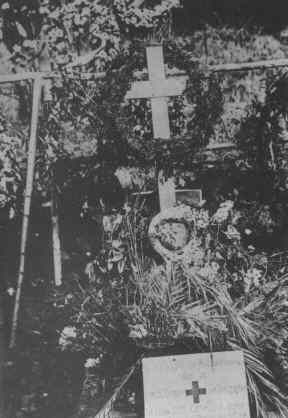
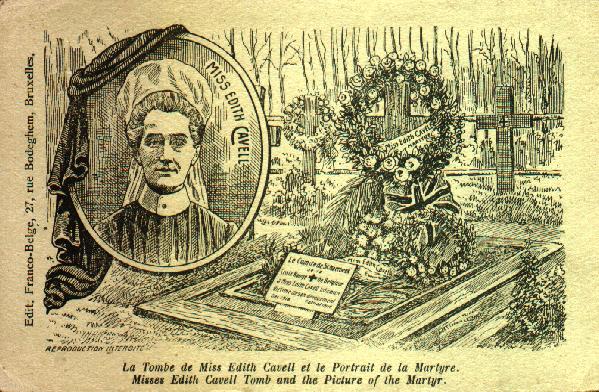
Edith Cavell's temporary grave in Brussels, 1915 to 1919

Edith Cavell's temporary grave in Brussels, 1915 to 1919

Papers released in 2005 show that the British government was divided. Some thought that the Germans would not shoot a nurse who had looked after German soldiers.

Others feared for her life, but thought nothing could be done to help her. Sir Horace Rowland from the Foreign and Empire Office wrote, “I am afraid that it is likely to go hard with Miss Cavell, I am afraid we are powerless.”

Lord Robert Cecil agreed, writing “Any representation by us will do her more harm than good.” More details of the 2005 papers can be found in this article from The Guardian newspaper.

The German governor of occupied Belgium, Baron von der Lancken, opposed the death sentence.

The governments of neutral countries, including the USA, Spain and Holland, all made urgent representations via their local representatives. The American First Secretary later wrote:

We reminded him (Baron von der Lancken) of the burning of Louvain and the sinking of the Lusitania, and told him that this murder would stir all civilized countries with horror and disgust. Count Harrach [local military commander] broke in at this with the remark that he would rather see Miss Cavell shot than have harm come to one of the humblest German soldiers, and his only regret was that they had not “three or four English old women to shoot”.

Letters sent by the Americans to the Germans in relation to Edith Cavell can be found here.

The execution and burial

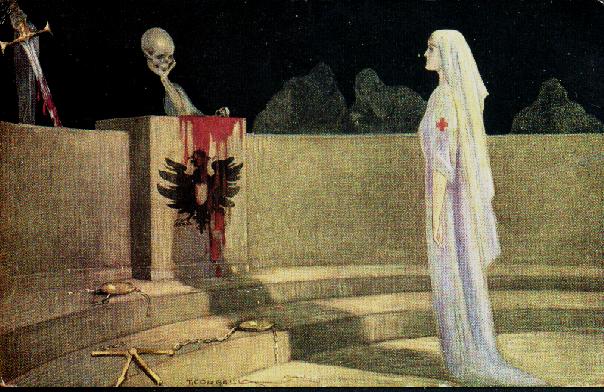
An Italian postcard showing the trial of Edith Cavell (some artistic licence taken......)

An Italian postcard showing the trial of Edith Cavell (some artistic licence taken......)

The German Army was in a hurry, to make sure their verdict was not over-ruled. The execution, by firing squad, was fixed for 12th October 1915. Edith Cavell was executed early in the morning, together with four Belgian co-conspirators. Her last words were:

Ask Father Gahan to tell my loved ones later on that my soul, as I believe, is safe, and that I am glad to die for my country

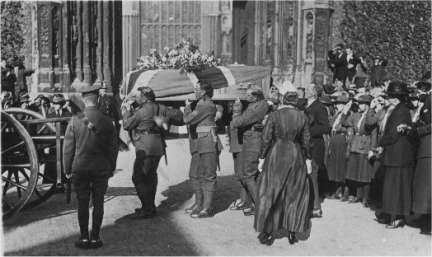
Edith Cavell's coffin arriving at Norwich Cathedral, May 1919

Edith Cavell's coffin arriving at Norwich Cathedral, May 1919

Here is a link to the English translation of the account written by Pasteur Le Suer, the clergyman who spent time with Edith Cavell the day before her execution, and who accompanied her to the firing squad and witnessed her death and burial.

At the end of the execution, he wrote:

A few minutes later the coffins were lowered into the graves, and I prayed over Edith Cavell’s grave, and invoked the Lord’s blessing over her poor corpse. Then I went home, almost sick in my soul.

Edith Cavell was buried next to the place where she was shot. After the end of the First World War, her coffin was exhumed and brought back to England.

A state funeral was held in Westminster Abbey on 15th May 1919, but according to her family’s wishes, her coffin was taken to Norwich Cathedral, and she was buried for the last time there on 19th May 1919.

A service is held at her graveside every October, on the nearest Sunday to the date of her death.

Memorials and Propaganda

The Imperial War Museum in London holds documents relating to Edith Cavell, including her diary from 1914 and 1915, and letters she wrote to her mother and others. The relevant page on their website can be found here.

The shooting of a 49 year old nurse, who had looked after enemy soldiers to the best of her ability, shocked people around the world.

In England, the execution was a huge news story, and the government did not hesitate to use it as anti-German propaganda.

Outrage, and sentiment, were also widespread in Belgium, Italy and France, where series of postcards were issued, depicting (with a liberal use of imagination) the scenes of Edith Cavell’s arrest, trial and execution.

The public was also shocked in neutral countries, such as Spain and America, and Edith Cavell became a martyr.

Brand Whitlock, for example, who was an American diplomat based in Belgium in 1915, wrote of Edith Cavell’s arrest, trial and execution:

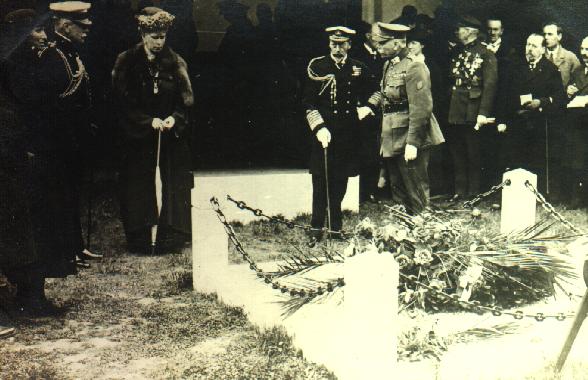
King George V and Queen Mary visiting Edith Cavell's grave

King George V and Queen Mary visiting Edith Cavell's grave

These so-called courts, of whose arbitrary and irresponsible and brutal nature I have tried to give some notion, were mere inquisitorial bodies, guided by no principle save that inherent in their own bloody nature; they did as they pleased, and would have scorned a Jeffrys as too lenient, a Lynch as too formal, a Spanish auto do fé as too technical, and a tribunal of the French Revolution as soft and sentimental.

Before them the accused had literally no rights; he could not even, as a right, present a defence, and if he was permitted to speak in his own behalf it was only as a generous and liberal favour.

Which does not represent a ringing endorsement of the German legal system.

Enlistment went up sharply - more than double the number of men enlisted in the British Army in the months after she died, compared with the same period before her execution.

Stone memorials and statues were erected in her memory, in Norwich, London, Manchester, Peterborough, and many other places, both in the UK and in the Commonwealth.

Schools, hospitals, roads, pubs, scholarships, mountains and roses were all named Edith Cavell in her memory. The Royal Norfolk Regimental Museum has a page about her here, including a colour portrait.

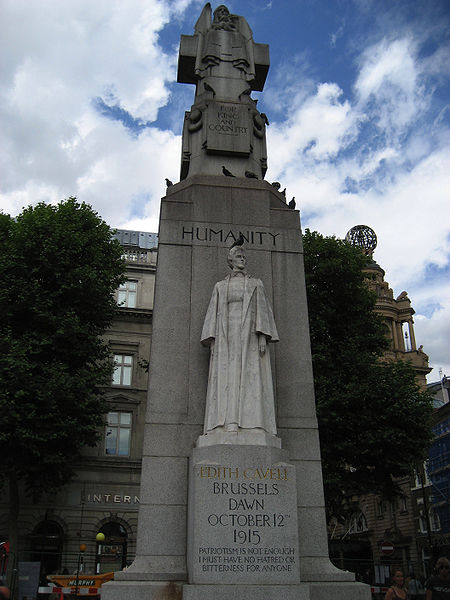
Edith Cavell statue in London

Edith Cavell statue in London

A large statue to Edith Cavell is in London, near Trafalgar Square. It says:

FOR KING AND COUNTRY

HUMANITY

EDITH CAVELL

BRUSSELS

DAWN

OCTOBER 12th 1915

PATRIOTISM IS NOT ENOUGH

I MUST HAVE NO HATRED OR

BITTERNESS FOR ANYONE

Edith Cavell is venerated by the Church of England, and her Holy Day is 12th October.

She did not see herself as a martyr or saint. She said instead that she was, a nurse who tried to do her duty.

The Year Without a Summer: 1816

By Blog author, April 17, 2010 1:19 am

1815 represented a pretty good year for the United Kingdom. The “damn close run thing” at Waterloo had seen, finally, Napolean’s defeat. Peace had come, and the UK was on the winning side of it. Life looked good, the future looked bright.

But the next year, disaster came, and 1816 came to be known as “The Year Without a Summer”.

There were serious consequences all over the world, particularly for Northern Europe and North America. This post looks at the disaster and the consequences in this country.

Why no summer?

Map showing variation from normal temperatures in Europe in the "Year Without a Summer", 1816

Map showing variation from normal temperatures in Europe in the "Year Without a Summer", 1816

In April 1815, however, there had been a massive explosion. Mount Tambora volcano, in the Dutch East Indies (modern-day Indonesia), has been erupting since 1812, went bang.

38 cubic miles of pyroclastic material was ejected into the atmosphere. The ash column rose to about 140,000 feet. It was probably the largest ash explosion since the last Ice Age.

This followed four other serious volcanic events, which had taken place over the previous 4 years, so there was already a fair amount of volcanic dust and ash in the atmosphere.

In addition, solar activity had hit a periodic low point. So there was a confluence of damaging events.

The ash and dust in the atmosphere took a while to circulate, therefore there was a “summer” in 1815 (although it had been cold and wet for a few years, because of the other eruptions and the solar minima).

The vast quantities of volcanic debris in the atmosphere restricted the amount of sunlight which reached the earth’s surface, and there was a huge quantity of sulphur floating around the earth.

There is an article here, from History Magazine, about the effects of various volcanic eruptions.

The weather in England in the summer of 1816

Mount Tambora Volcano in 2006

Mount Tambora Volcano in 2006

It was cold, wet, and miserable. It snowed near London at Easter, in May and at the end of July, for example - a long way from typical weather in the south of England.It rained most days from May to September - 142 out of 153 days in the Lake District. There were snow drifts in the Lake District in July, and ice on London ponds in September.

World-wide temperatures dropped significantly, and it was one of the coldest summers in English records (from the 16th century onwards).

Agriculture and crop failures

Crops were damaged by cold rainfall, and didn’t grow properly because of a lack of sun. Many crops rotted in the fields before they could be harvested, and more rotted after harvesting, because it was so damp.

In western England, Wales and Ireland, there were near-total crop failures in some areas. Farm labourers found themselves out of work in large numbers, and added to the soldiers who had been demobbed after the end of the Napleonic Wars.

Social consequences of the year without a summer

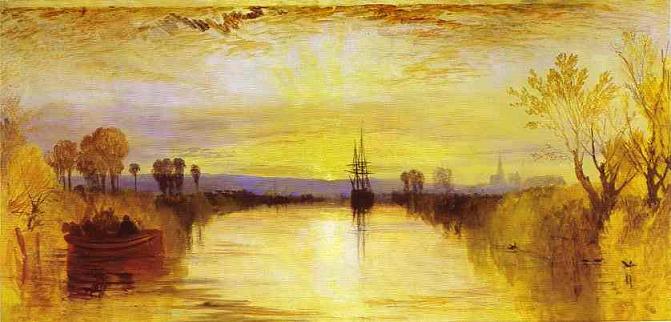
Chichester Canal by J M W Turner

Chichester Canal by J M W Turner

All hell broke loose, not surprisingly. Unemployment rose sharply, and famine threatened. The price of basic food stuffs soared, and many people went very hungry. Disease and infection rose, because of malnutrition and the wet conditions.

Riots and disturbances occurred all over the country. In one riot, over 100 food shops were broken into and ransacked, and the Luddite movement, which had been suppressed by 1813, re-gained power - in one attack on a factory in Loughbrough, over £6,000 worth of machinery was broken.

Mary Shelley, on holiday with friends in Switzerland, took advantage of the foul weather to write Frankenstein. And the wonderful sunsets inspired artists, including Turner.

The Queen and the Prime Minister - Calling a General Election

By Blog author, April 12, 2010 2:24 am

General Elections for the House of Commons

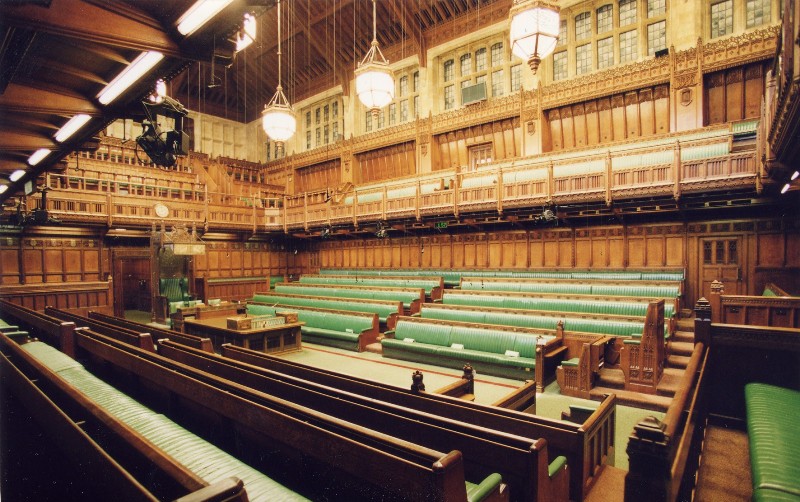
The House of Commons Chamber

The House of Commons Chamber

The main United Kingdom legislature, the House of Commons, is made up of Members of Parliament (MPs) who each represent one parliamentary constituency, or geographical area.

In the General Election held in 2005, there were 646 constituencies, and in the forthcoming 2010 election, there will be 650.

Since coming to the throne, Queen Elizabeth II has had (so far) 11 Prime Minsters, starting with Winston Churchill.

This post is about the calling of a General Election, who does it and how it is done, and how often they are held.

How often are General Elections called?

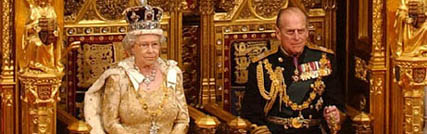
Queen Elizabeth and Prince Phillip at the State Opening of Parliament

Queen Elizabeth and Prince Phillip at the State Opening of Parliament

There is no minimum term for a Parliament.

A General Election can be called at any time, the Queen then dissolves Parliament and a date is set.

The absolute maximum is 5 years, except if everyone agrees it should be longer (during the First World War and the Second World War, coalition Governments held power for longer than 5 years, but short of a serious national emergency, it’s 5 years max). The law is set out in the Parliament Act 1911.

In 1974, for example, there were two General Elections - in February and October.

Since I was born, the period between General Elections has been 4-5 years, tending to be 4 when the Government felt confident, and 5 when it did not. So there were General Elections in 1979, 1983, 1987, 1992, 1997, 2001, 2005, and one must be held in 2010.

Who decides when to hold a General Election

It is the Queen who is responsible for both summoning a Parliament and dissolving it. She acts on the advice of her Prime Minister, so in effect, it’s the Prime Minister and his party who decide when to hold an election. So the Government can choose a time it feels is advantageous to hold the election, or if no such time presents itself, hold on until the bitter end of the 5 year period. The Official Site of the British Monarchy is here.

What happens once the Prime Minister decides to hold a General Election

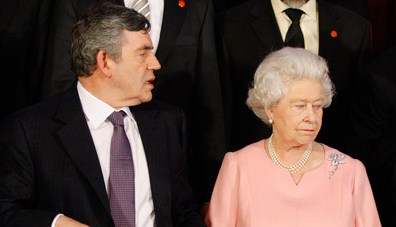
Queen Elizabeth and the Prime Minister, Gordon Brown

Queen Elizabeth and the Prime Minister, Gordon Brown

Once the PM has decided to name the day, he pushes off to Buckingham Palace and asks the Queen to dissolve Parliament, and to summon a new Parliament to advise her.

The date for the General Election is 3-5 weeks after this - in 2010, for example, the Prime Minster (Gordon Brown) went to Buckingham Palace on 6th April to request the dissolution, and the General Election date was set for 6th May.

The BBC’s article on Gordon Brown’s visit to Buckingham Palace can be found here.

The Royal Proclamation

The Queen issues a Royal Proclamation, which sets out the most significant laws passed by her Government since the last General Election, dissolves Parliament, and summons a new Parliament, which will meet after at least 20 days have passed since the Proclamation (Representation of the People Act 1918). She then sends a Royal Messenger, suitably clad in scarlet, to the Houses of Parliament, and he reads the Proclamation to both the House of Commons and the House of Lords.

Armed with a copy of the Royal Proclamation, the Clerk of the Crown in Chancery sends out Election Writs to the Returning Officer in each constituency, telling him to organise the election for that Member of Parliament. (A busy chap, with 650 of them to get out quickly).

And thus the General Election campaigns begin!


County Hall - once London’s government, now hotels, art and fish

By Blog author, April 6, 2010 2:44 am

London’s Local Government

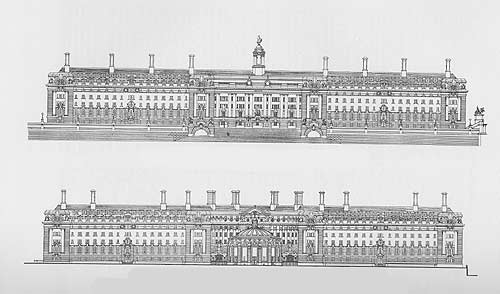
The original plans for London County Hall, from 1909

The original plans for London County Hall, from 1909

Until the late 19th century, “London” was just the “square mile”, or what is now known as “the City”, the area within the Roman and medieval walls.

The rest of what is now Greater London was the City of Westminster, part of other counties, such as Kent, Middlesex and Essex, or local parishes and boroughs (such as Southwark).

In 1889, the London County Council (LCC) was formed, covering what is now thought of as Inner London (which excludes the City of London itself, independence is maintained there).

In 1965, the body expanded to cover the City’s growth since Victorian times, and was re-named the Greater London Council (GLC).

From 1965 to 1986, the GLC ran many parts of London’s public sphere, co-operating with the local councils.

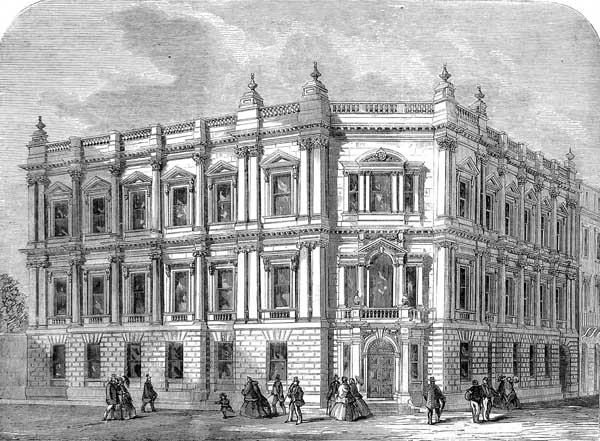
The LCC's first home, formerly the Metropolitan Board of Works

The LCC's first home, formerly the Metropolitan Board of Works

From 1986 to 2000, London was the only major city in the world not to have its own governing body, instead the city was run by the many local councils which make up the urban area – this caused many problems over matters which affected the whole city, such as management of the river.

The LCC and GLC operated from County Hall, a grand building on the south bank of the River Thames, nearly opposite the Houses of Parliament in Westminster.

The site of London County Hall

The land was originally part of St. Mary’s Lambeth, and was called Peddler’s Acre after the varying myths over a peddler who had owned the land and bequeathed it to the church.

From its foundation, the LCC operated from Spring Gardens, a building erected for and used by the Metropolitan Board of Works, whose functions (among others) the LCC inherited when it was set up.

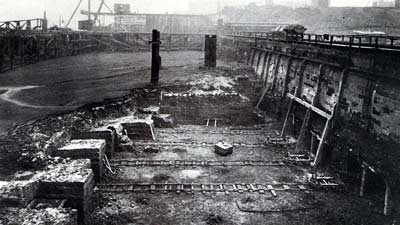
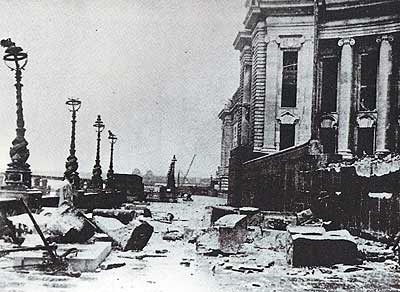
Land was reclaimed from the Thames for the front of the building and the embankment

Land was reclaimed from the Thames for the front of the building and the embankment

The large increase in duties conferred on the LCC by the Local Government Act meant the body soon ran out of room, and looked to buy the land just east of Westminster Bridge, to build its own County Hall.

The London County Council bought the land to built its large new home on, and constructions started in the Edwardian era, before the First World War. They paid £617,032 for the land, in 1904.

The building was mostly finished by 1922, with extra bits added here and there until the late 1950s.

While the foundations were being dug for the Hall a number of interesting Roman artefacts were found, including part of a wall and a Roman boat, which were dug up and transferred to the Museum of London.

London County Hall’s architecture

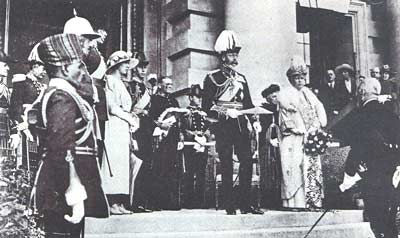
King George V and Queen Mary opening County Hall in 1922

King George V and Queen Mary opening County Hall in 1922

The design of the new building was the subject of a public competition. The winner, out of 51 applicants, was Ralph Knott. The Hall itself is a grand, enormous building.

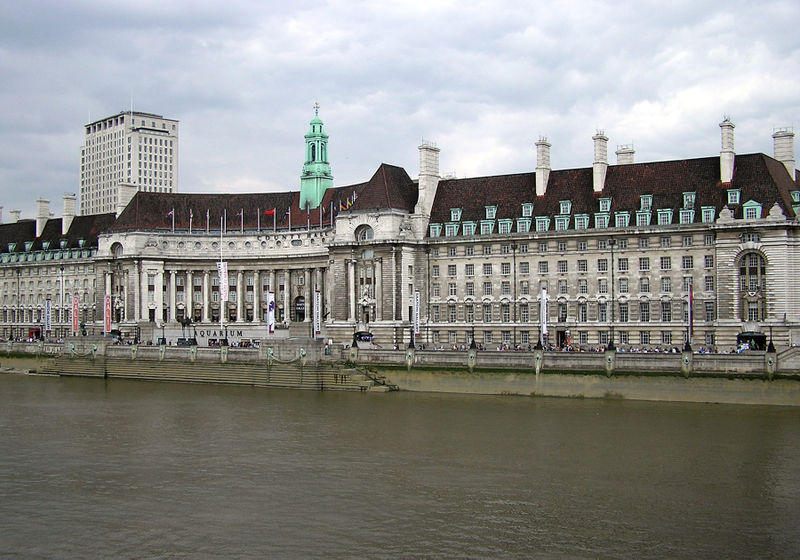
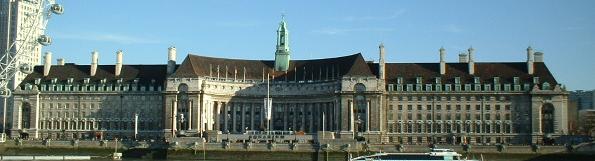
It’s built with a huge semi-circle in the centre, and two wings extending out along the river.

The building is built mainly from grey stone, with columns along the front and a green, seemingly leaded, tower or spire above the centre and green leading along the windows where the walls meet the roof.

The main stone used was Portland Stone - a grey-white limestone from Dorset which was a common choice for public buildings in London. St. Paul’s Cathedral, the Tower of London, the Bank of England, and Buckingham Place, for example, are all built of Portland Stone.

Now - no politicians, but hotels, sharks, and a museum or two

County Hall during the Second World War

County Hall during the Second World War

The Hall is no longer a local government building – it contains two hotels, one pricey and a cheaper option, and some flats, a gym, a couple of restaurants, and tourist attractions.

The London Aquarium is here - this is a good place to take young children fed up with the round of old churches, national buildings and Old Masters!

The variety of sea life here is amazing – with over a million litres of water in the various tanks, this is one of the largest aquaria in Europe. There’s a huge shark tank, and a recreation of a coral reef which is astonishing in its complexity.

The tanks are positioned so that the visitor can walk underneath, then next to, and then above the same tanks, after using stairs, corridors and lifts. The London Aquarium’s website can be found here.

London County Hall, seen from the north bank of the River Thames, by Westminster Bridge

London County Hall, seen from the north bank of the River Thames, by Westminster Bridge

Also in County Hall is the fascinating London Film Museum. This has a mixutre of regular exhibitions and temporary displays, and is well worth a look - the museum’s website is here.

The London Eye is next to County Hall, and has its ground-level offices in County Hall, on the east side of the building.

The Eye has 32 capsules (representing the 32 London boroughs). It’s a beautiful and modern addition to the River Thames’ sky line. Click here for London Eye tickets

The nearest tubes are Waterloo and Westminster.

London County Hall, seen from the River Thames, to the north of the main building

London County Hall, seen from the River Thames

The Queen’s Maundy Money: Silver for the Poor on Maundy Thursday

By Blog author, April 2, 2010 2:22 am

The Day Before the Easter Holiday Starts

Every year, the Royal Mint makes special coins, of pure silver, with different values from normal coins.

The Queen then takes these coins, placed in specially-made leather purses, and gives her age in pence to a number of men and women equal to her age in a Cathedral ceremony, every Maundy Thursday.

Maundy Thursday, the day before Good Friday, is in many ways the start of the Easter holiday in England.

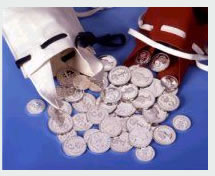
The Queen's Maundy Money, especially minted, comes in red and white leather purses

The Queen's Maundy Money, especially minted, comes in red and white leather purses


Although it’s a working day, it’s rather like Christmas Eve - lots of people will either take the day off, or make an early get-away for the 4-day Easter weekend. (There is a holiday on Good Friday and a bank holiday on Easter Monday, so it’s a nice break from the regular working routine).

There is a centuries-old tradition of a Maundy ceremony (from c.600 AD) and more recently (since the time of King John or so) a ceremony on Maundy Thursday involving the King or Queen, in which coins are given to the deserving poor.

This post is about the history and practice of the Queen’s Maundy Money.

Origin of the phrase “Maundy Thursday”

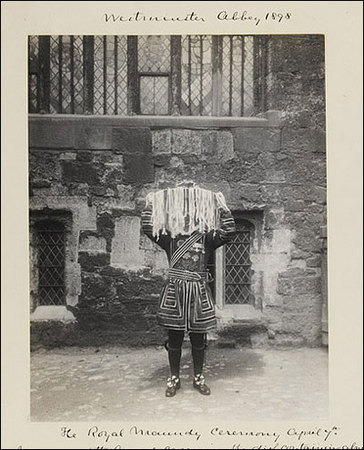
The Queen's Maundy Money ceremony in 1898, at Westminster Abbey

The Queen's Maundy Money ceremony in 1898, at Westminster Abbey

There is not a united view about the origin of the phrase. The most popular idea is that it comes from the phrase Mandatum novum do vobis ut diligatis invicem sicut dilexi vos in the Latin Vulgate Bible, where Christ said to his apostles, A new commandment I give unto you, that ye love one another, as I have loved you. (Gospel according to St. John, 13.34).

Mandatum, which is also the origin of the words “mandatory”, “mandamus” and “mandate”, is thought to be the origin of the “Maundy” part of the phrase, and the “Thursday” part is rather self-explanatory.

Early Maundy Ceremonies

An important part of early Maundy Thursday celebrations was the washing of poor people’s feet, in imitation of Christ, and to show essential humility and the equal-before-God idea (a concept that most medieval bishops honoured more in the breach than the observance, as a general rule).

Foot washing was done by bishops and other important clergymen, and also by the King or Queen, until the mid 17th century - King James II was the last monarch to wash feet personally. The Archbishop of Canterbury, Rowan Williams, does it each Maundy Thursday now.

The washing of feet comes from the Last Supper, where Christ washed the feet of his disciples during the Passover celebrations.

Giving To the Poor

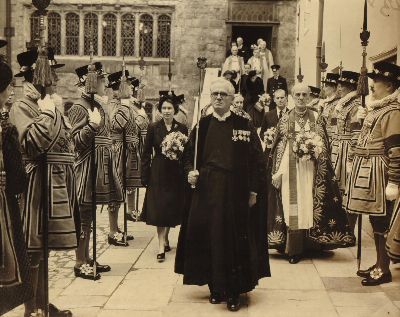
The Queen at the Maundy Money ceremony in 1952, her first public engagement as Queen

The Queen at the Maundy Money ceremony in 1952, her first public engagement as Queen

Anglo-Norman Kings certainly appear to have given alms to the poor on Maundy Thursday.

King John is recorded as having given alms to the poor in Knaresborough, in Yorkshire, when he happened to be there for Holy Week in 1210 AD. He gave knives, clothes and food. (There are lots of references to his giving forks, too. That strikes me as inherently unlikely, because people didn’t use forks for eating until several centuries later).

It is unlikely that King John was the first English King to give alms on this day.

Medieval Maundy Money

The first recorded giving of money to commemorate Maundy Thursday is during the reign of Edward I, who ruled from 1272 (and was King John’s grandson).

The process became more formalised, and more important after the Reformation, as the King or Queen was then not only the ruler of the secular country, but head of the Church of England, too.

Queen Elizabeth II’s Maundy Money

A 3d coin, or thruppeny bit, showing the "young" Queen's head which still appears on Maundy money today

A 3d coin, or thruppeny bit, showing the "young" Queen's head which still appears on Maundy money today

The process has been pretty similar for some decades, now.

Each Maundy Thursday, the Queen gives out Maundy purses at one of England’s Cathedrals. The only exception was in 2008, where the ceremony was held in St. Patrick’s Church of Ireland cathedral, in Armagh, Northern Ireland.

The red and white Maundy purses are given to a number of elderly men and women, chosen now from the local area for charitable and other good works. There is one man and one woman for each of the Queen’s years - so as she is now 84 years old, on 1st April 2010 she gave Maundy money to 84 men and 84 women, in Derby Cathedral.

The white purse contains a £5 coin and a 50p coin, and the red purse contains 1p, 2p, 3p and 4p coins, adding up to the Queen’s age again. So the 84 men and 84 women get 84 pence in coins in their red leather purses.

A 50 pence piece in general circulation, showing the Queen's most recent portrait

A 50 pence piece in general circulation, showing the Queen's most recent portrait

The coins are not normal coins. 1p, 2p and 50p coins are in general circulations, but 3p, 4p and £5 coins are not. These coins are all legal tender, for their face value, but are obviously worth a great deal more than 3p or whatever.

Unlike modern coins, which are struck from alloys, the Maundy Money coins are minted each year, from sterling silver, so the coins are 92.5% silver.

In addition, the specially-minted coins feature the first portrait of Elizabeth II, issued on her coins from 1953. This “young portrait” was replaced on normal coins in 1962, but remains on each year’s Maundy Money.

Until 1909, extra sets of Maundy coins were struck and could be purchased. Edward VIII decided to abolish this, and since 1909, the only sets of Maundy coins issued have been to the recipients at the annual ceremony.

Obviously, the number of coins increases each year as the Queen gets older, and the number of pennies issued rises by one, as does the number of men and women who receive them.

The BBC’s article about 2010’s ceremony in Derby can be read here, and the Monarchy’s official article about the ceremony is here.


Panorama theme by Themocracy