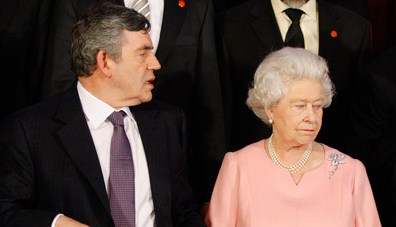
The 5 Longest Reigning Kings & Queens – Elizabeth II, Third Place
 Comments (10)
 .
Queen Elizabeth II - 58 years 4 months 11 days (and counting)
Some English (and British, after the accession of King James I of England & VI of Scotland in 1603) managed to keep their backsides firmly on the throne for longer than the average birth to death life expectancy of their subjects.
This post is one of a series about the 5 longest reigns – all of which were (or are, in the case of Elizabeth II) over 50 years.
For obvious reasons, they were all young when they came to the throne, but not all were children.

Queen Elizabeth II in 1952, just after her accession to the throne. © Estate of Dorothy Wilding
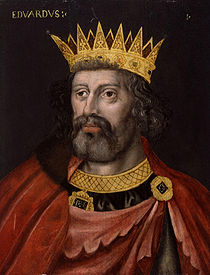
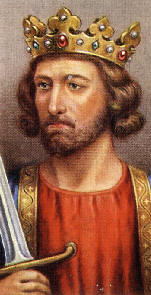
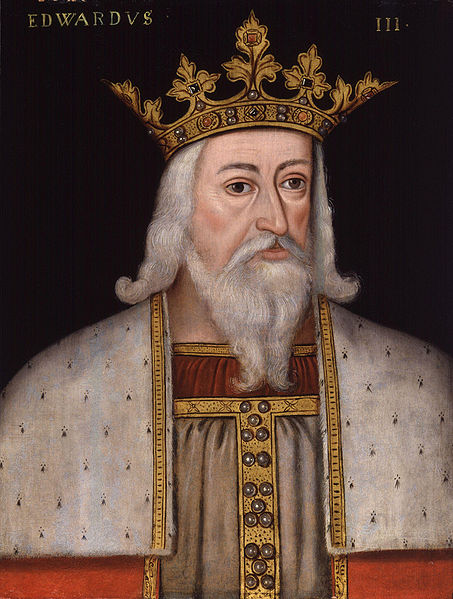
For the fifth-longest English reign, see King Edward III in the 14th century, and for the fourth-longest reign, see King Henry III in the 13th century.
The third-longest reign is that of the present Queen, Elizabeth II.
.
Family and Childhood
Princess Elizabeth Alexandra Mary was born on 21st April 1926, and is now 84 years old. She was named after her mother, great-grandmother, and grandmother (in that order). Her title at birth was Her Royal Highness Princess Elizabeth of York.
At the time Elizabeth was born, she was not expected to inherit the throne herself. She was the elder of two daughters born to Prince Albert, Duke of York, and his wife, Elizabeth Bowes-Lyon.
Queen Elizabeth II’s Father

King George VI, Elizabeth II's father, in 1940
Prince Albert Frederick Arthur George, Queen Elizabeth’s father, was born on 14th December 1895, the second son of the future King George V and his wife, Queen Mary of Teck.
Albert was named after his grandfather, Queen Victoria’s husband, Prince Albert of Saxe-Coburg-Gotha.
Little Prince Albert had one older brother, one younger sister, and three younger brothers, all with long strings of Christian names.
1. Edward Albert Christian George Andrew Patrick David (later Edward VIII, later still the Duke of Windsor)
2. Victoria Alexandra Alice Mary (known as Mary)
3. Henry William Frederick Albert
4. George Edward Alexander Edmund
5. John Charles Francis
Queen Elizabeth II’s Mother
Lady Elizabeth Bowes-Lyon was born on 4th August 1900, the 9th of the 10 children born to Claude Bowes-Lyon,14th Earl of Strathmore and Kinghorne, and his wife, Cecilia. Lady Elizabeth had 3 older sisters, 5 older brothers, and one younger brother. One of her brothers, Fergus, was killed in the First World War.
Elizabeth’s Parents’ Marriage and Children

Elizabeth Bowes-Lyon, Duchess of York, in 1925, aged 25
The marriage was unusual because it was between a member of the Royal Family and a commoner. Lady Elizabeth Bowes-Lyon was not the normal choice for a Prince - they mostly married foreign princesses, in arranged or semi-arranged marriages.
“Bertie”, as Elizabeth II’s father was known to his intimates, first proposed marriage in 1921. It took Lady Elizabeth two years to agree, as she was reluctant to join the Royal Family.
In the end, she accepted the proposal and the couple were married in 1923.
The Duke and Duchess of York, as they then were, had two children, Elizabeth in 1926, and Princess Margaret Rose, born on 21st August 1930.
Elizabeth II’s upbringing
Elizabeth and Margaret spent most of their childhood at their parents’ London home. They did not go to school, but instead were educated by their mother and governess, Marion Crawford.
Elizabeth had other lessons, such as French, from private tutors, and a special Girl Guides company was formed so that Elizabeth and Margaret could join it.
.
The Abdication Crisis
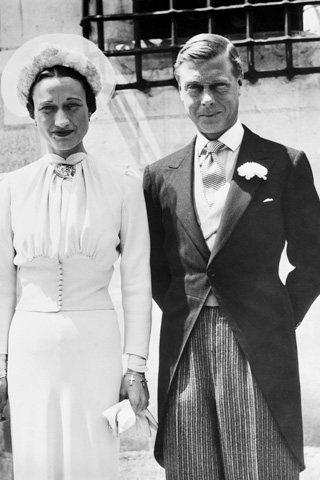
Edward and Wallis Simpson, Duke and Duchess of Windsor, on their wedding day
Until 1936, when Elizabeth was 10 years old, she was not expected to inherit the throne. In January 1936, Elizabeth’s grandfather, George V, died, and the throne was inherited by her uncle, proclaimed Edward VIII.
Although unmarried, he was fully expected to choose a suitable bride and produce heirs of his own.
Edward, however, met and proposed marriage to the American Wallis Simpson. Wallis had been Edward’s mistress since about 1933, but was still married to her second husband, whom she divorced in 1936.
The Church of England did not allow divorced people who still living ex-spouses to marry in church, and Wallis had two living ex-husbands.
A constitutional crisis occurred, and King Edward VIII abdicated on 11th December 1936, so that he could marry.
Edward and Wallis were later created Duke and Duchess of Windsor. The couple had no children.
Elizabeth’s father therefore became King George VI, and Elizabeth herself was next in line to the throne.

Queen Elizabeth II, then Princess Elizabeth of York, as a toddler
Albert, soon to be King George VI, was horrified.
He hated the idea of becoming King, and was a shy, reserved man. He had had a bad stammer as a child, and had never wanted a very public role.
When he visited his mother, Queen Mary, on the day before the abdication, he said “When I told her what had happened, I broke down and sobbed like a child.”
But accept the throne he did, as he felt was his duty.
The couple, now King George VI and Queen Elizabeth, abandoned their quieter, more private life, and moved into Buckingham Palace with their daughters, Elizabeth and Margaret.
.
Queen Elizabeth’s Later Childhood and Adolescence
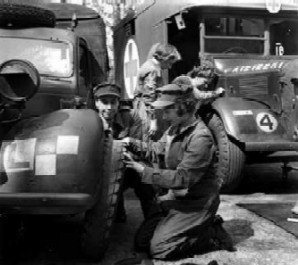
Princess Elizabeth changing a tyre during the Second World War
Elizabeth was now heir to the throne, and her education changed to take account of that.
She was taught constitutional law and procedure by Henry Marten, the Vice-Provost of Eton (a famous public school) and taught religious matters and canon law by the Archbishop of Canterbury, in preparation for becoming head of the Church of England.
Elizabeth and Margaret also learned to ride, swim, draw, paint, and dance.
In 1940, the Blitz was at its height, and the 14 year old Princess Elizabeth and her sister moved to Windsor to avoid the bombs.
King George VI and Queen Elizabeth stayed in London, in Buckingham Palace, touring bomb sites, being generally visible, and trying to raise morale. They did stay at Windsor Castle on many nights, however.
In February 1945, Elizabeth joined the Women’s Auxiliary Territorial Service. She learned to drive and maintain army lorries, and served in uniform for 8 months, until the end of the War.
.
Queen Elizabeth’s Marriage and Children
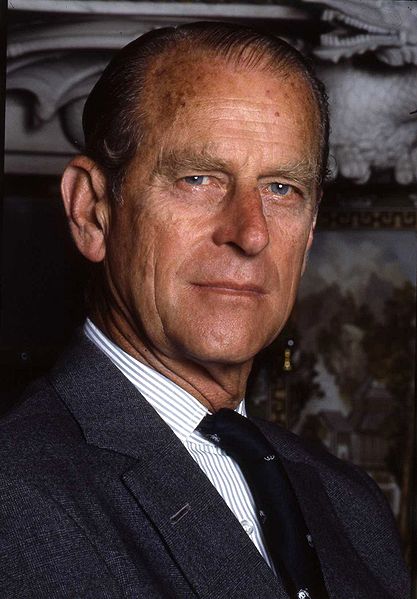
His Royal Highness Prince Philip, Duke of Edinburgh
Princess Elizabeth met Prince Philip of Greece and Denmark as a child, in 1934 and 1937. After they met again in 1939, the couple began to exchange letters. The couple are related as both second and third cousins through various descents from Queen Victoria.
Prince Philip
Philip was born on 10th June 1921 in Corfu, Greece, and was the fifth child (and only son) of Prince Andrew of Greece and Denmark and Princess Alice of Battenberg.
In 1922, when Philip was still a baby, his uncle, the King of Greece, was forced to abdicate and the whole family went into exile.
Philip was educated in France until he was 7, then in England, then in Germany, and from 1933, in Scotland. Philip’s mother was placed in a lunatic asylum, diagnosed with paranoid schizophrenia, in 1930, and saw her son very rarely for the next 8 years.
Philip joined the Royal Navy when he was 18 years old, and served in the Navy through the Second World War, until 1952. He saw active (and dangerous) service throughout the War.
Engagement and Marriage

Queen Elizabeth II and Prince Philip, Duke of Edinburgh, at the Queen's Coronation, 1953
Philip proposed marriage to Elizabeth early in 1946. George VI gave his permission, on condition that the engagement was not made public until Elizabeth’s 21st birthday.
Before the public announcement in July 1947, Philip renounced all his Greek, Danish and other royal titles, adopting the surname of his uncle, Earl Louis Mountbatten.
Philip Mountbatten also became a British Subject, ceased to be Greek Orthodox, and converted to be a member of the Church of England.
Shortly before the marriage, George VI bestowed the title His Royal Highness on Philip,and Philip was also created Duke of Edinburgh, Earl of Merioneth, and Baron Greenwich of Greenwich.
Philip and Elizabeth married on 20th November 1947. As the War still loomed large in the public mind, many of Philip’s relatives were not invited to attend: Philip’s sisters had all married Germans.
Queen Elizabeth’s Children and Grandchildren
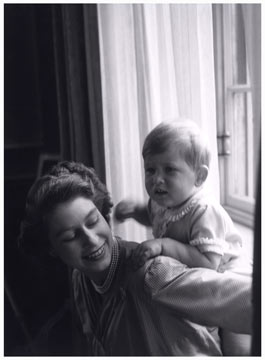
Queen Elizabeth II and her eldest son, Prince Charles
Elizabeth and Philip have four children:
1. Charles Philip Arthur George, Prince of Wales, born 14th November 1948
Charles has two children, Prince William and Prince Harry, born in 1982 and 1984.
2. Anne Elizabeth Alice Louise, the Princess Royal, born 15th August 1950
Anne has two children, Peter Phillips and Zara Phillips, born in 1977 and 1981
3. Andrew Albert Christian Edward, Duke of York, born 19th February 1960
Andrew has two children, Princess Beatrice and Princess Eugenie, born in 1988 and 1990
4. Edward Antony Richard Louis, Earl of Wessex, born 10 March 1964
Edward has two children, Lady Louise Wessex, and James, Viscount Severn, born in 2003 and 2007
.
Accession to the Throne

Queen Mary of Teck, King George V's wife, and Queen Elizabeth II's grandmother
From 1948, King George VI was increasingly unwell, and Elizabeth replaced him on most overseas visits and tours. George was a heavy smoker, and developed lung cancer.
On 31st January 1952, Princess Elizabeth flew to Kenya on a royal visit, with Prince Philip. On 6th February, King George VI died in his sleep, and his daughter became Queen Elizabeth II. She was proclaimed as Queen Elizabeth II throughout the British Empire and British Commonwealth.
The tour had originally been intended to extend to Australia and New Zealand after Kenya, but it was cut short and the new Queen arrived home.
At the time of her accession to the throne, there were three queens alive in the country. Queen Elizabeth II, Queen Elizabeth, wife of King George VI, and Queen Mary, wife of King George V (Elizabeth’s grandmother).
To avoid confusion, Elizabeth’s mother gained a new title, “Queen Elizabeth the Queen Mother”, often abbreviated by tabloid newspapers to “the Queen Mum”.
Queen Mary survived her son George VI for over a year, but died in March 1953, before her granddaughter’s coronation.
.
The Coronation

Queen Elizabeth II in 2007
Elizabeth’s coronation represented both centuries of tradition and innovation. The essentials of the Coronation Service have been the same for about a thousand years.
Queen Elizabeth II was crowned by the Archbishop of Canterbury at Westminster Abbey on 2nd June 1953.
The innovation arose from the entire service, except for the anointing, being broadcast on television, and also on radio. The initial plan was to broadcast only the first part of the service live, but the Queen’s private intervention lead to almost all of it being televised.
An estimated 20 million people in the UK watched the service on television, and another 12 million listened to it on the radio.
The event established television in British life: many families acquired their first television sets specifically for the occasion.
My parents were both small children in 1953, aged 5 and 6. They both remember watching the coronation on television, in each case, on a set in a neighbour’s house bought especially for the event. Both my parents’ families acquired their own televisions within a year of the coronation.
You can see a video clip of the 1953 event here: The Coronation of Queen Elizabeth II
.
Queen Elizabeth II’s Titles

Queen Elizabeth, the Queen Mother, on her 100th birthday in 2000
Elizabeth is Queen of 16 countries:
United Kingdom, Canada, Australia, New Zealand, Jamaica, Barbados, the Bahamas, Grenada, Papua New Guinea, the Solomon Islands, Tuvalu, Saint Lucia, Saint Vincent & the Grenadines, Belize, Antigua & Barbuda, and Saint Kitts & Nevis.
She is also Head of the Commonwealth, and Supreme Governor of the Church of England.
For a fantastic article on Elizabeth’s hats and style throughout her reign, click on this article: The Hats of Elizabeth II
.
.
.
.